CS2 Trade Up Chaos: How Valve Broke the Steam Market
CS2's Trade Up Contract update let players trade $10 Covert skins for $1000 knives, crashing the Steam Community Market overnight.
On an otherwise ordinary October day in 2025, the Counter-Strike 2 community witnessed a financial earthquake. A seemingly modest patch from Valve introduced a feature that set off a chain reaction, crashing the Steam Community Market and reshuffling virtual fortunes overnight. The update, described by Valve as a “small” addition, extended the Trade Up Contract to Covert-quality items, better known as reds. Players could now exchange five regular Covert skins for a single knife or pair of gloves, or five StatTrak Covert items for a StatTrak knife. The math was simple, and the implications were staggering.
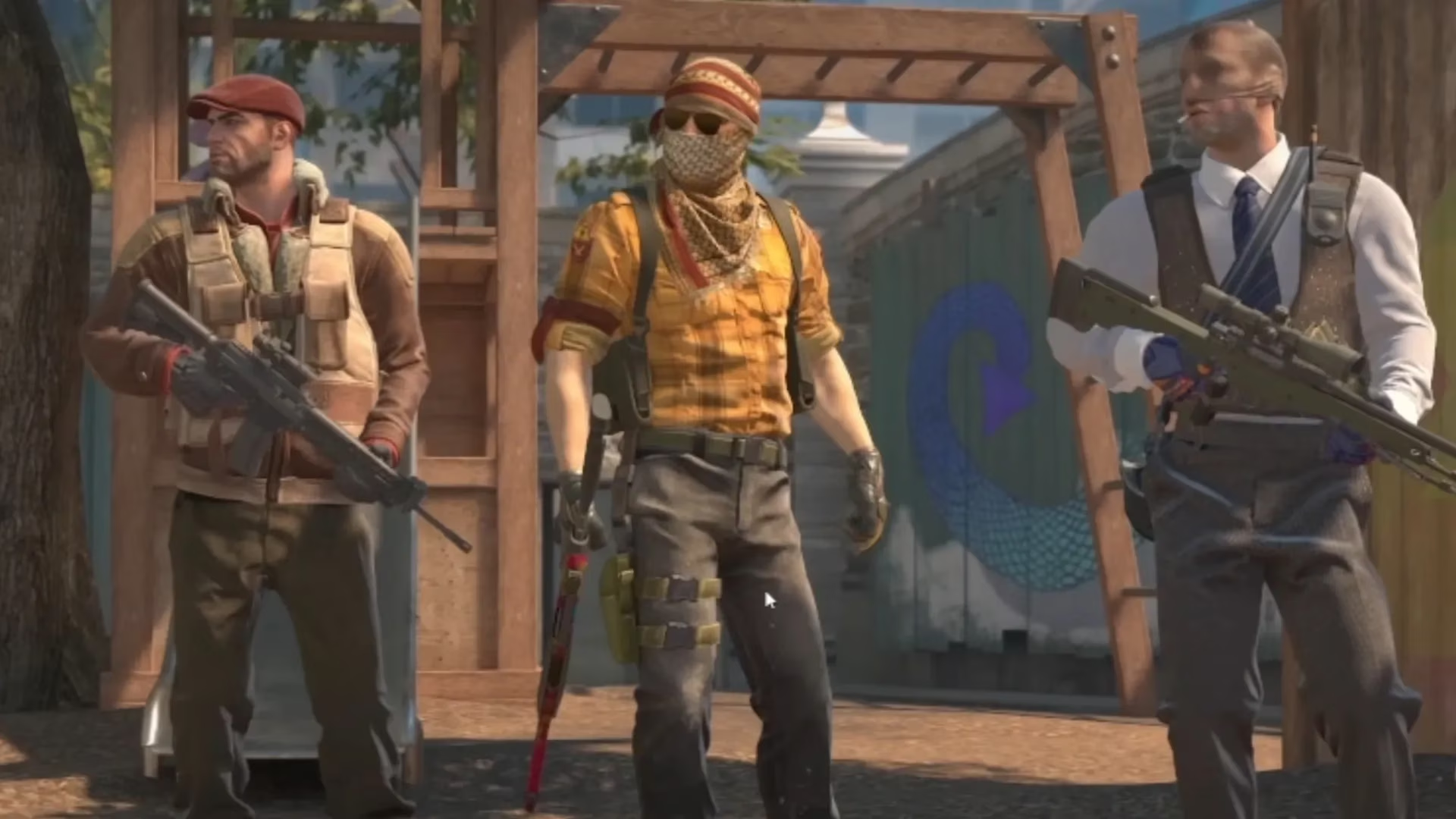
Before the update, Covert skins typically hovered around the $10 mark. Knives and gloves, on the other hand, could command prices in the thousands. Overnight, the marketplace turned into a frenzy of speculation and panic. The sheer volume of trades and listings overwhelmed Steam’s infrastructure, causing severe slowdowns and outright crashes. In a post that quickly went viral, a user summarized the madness: “If you’re wondering why Steam is either super slow, or crashed entirely right now: Valve just updated CSGO to let you trade up reds ($10 skins) into knives ($1000+ skins) and the entire market is crashing.” It was a moment that blurred the lines between a video game and a high-stakes trading floor.
The human stories behind the numbers were just as dramatic. One player lamented that a prized knife shed $1,400 in value within half an hour. Another gleefully recounted flipping a skin purchased months earlier for $3 into a $35 sale, celebrating a tenfold return while admitting it felt “stupid to miss out.” The update turned casual collectors into accidental speculators. A particularly eye-watering screenshot circulated online, showing a user’s formerly “worthless red skins” ballooning to a valuation of over £3.3 million — roughly $4.5 million at the time. The caption, half-joking, asked, “How do I explain this to the IRS?” The line between digital hobby and taxable event had never felt thinner.
Reaction threads on Reddit and social platforms became a mix of confusion, despair, and dark humor. Memes proliferated, including a fabricated Warren Buffett quote urging everyone to “freak the fuck out and panic sell everything right now. It’s fucking over.” One thread noted, with a hint of awe, that the update had made some collectors very rich very quickly. Others, however, saw their inventories decimated. The once-stable hierarchy of skin values — where rarity and aesthetics dictated price — was suddenly subverted by raw material utility. A $10 Covert could now be a lottery ticket for a $1,000 blade, and that possibility rewired the entire economy.
From a game design perspective, the change felt almost careless. The Trade Up Contract had always been a gamble, but it previously operated in a relatively low-stakes tier. Extending it to the Covert tier without adequate guardrails effectively printed money for anyone holding the right combination of items. The market, accustomed to organic supply and demand, was flooded with new high-tier skins. Prices cratered for knives and gloves while Covert reds exploded, but not evenly. Some specific collections and float values became wildly inflated, while others collapsed. The chaos rewarded fast fingers and punished those who slept through the patch notes.
Valve’s silence in the immediate aftermath only deepened the sense of crisis. The developer had a history of treating the skin economy as an emergent ecosystem — one they influenced but rarely managed directly. This hands-off approach, praised by some as laissez-faire genius, suddenly looked like negligence. Players demanded clarity: was this intentional? Would there be a rollback? What about those who had lost thousands in a matter of minutes? The Steam Community Market, which had evolved into a multi-million-dollar real-money exchange, showed cracks in its foundation.
As time passed, the initial shock gave way to a new equilibrium. By early 2026, the market had absorbed much of the disruption, though scars remained. Knife prices never fully recovered their pre-update stability, and Covert skins retained a permanent speculative premium. Traders adapted, developing new strategies around the altered Trade Up mechanics. Data aggregators and skin analysis websites added dedicated sections for “red trade-up ROI,” treating the feature not as a bug but as a core part of the CS2 economy. The episode became a case study in how digital marketplaces can be upended by a single design decision.
Looking back from mid-2026, the October 2025 update stands as a watershed moment for Counter-Strike 2. It exposed the fragile interdependence between game mechanics and real-world value, and it reminded millions of players that virtual property rights are only as stable as the game’s code. For some, it was a windfall; for others, a brutal lesson in asset volatility. Valve eventually released a follow-up statement acknowledging the market disruption and implementing minor adjustments, but the reputation of Steam’s marketplace as an unregulated bazaar had been cemented. The “Trade Up Chaos,” as it came to be known, is now referenced in discussions about player economies, digital scarcity, and the responsibilities of platform holders.
In the broader context, the incident also fueled ongoing conversations about CS2’s monetization model. Legal scrutiny over case openings and gambling-like mechanics had already been simmering. The Trade Up upheaval provided fresh ammunition for critics who argued that unregulated skin markets could cause real financial harm. A class-action lawsuit referenced the 2025 crash as evidence of Valve’s disregard for consumer protection. Meanwhile, content creators mined the saga for months, producing explainer videos, market retrospectives, and even documentaries on the “day Steam broke.”
The story of the Trade Up update is ultimately a testament to the power of player-driven economies. It demonstrated how a community could take a simple rule change — exchanging five items for one — and amplify it into a global event that rivalled traditional financial news. It also underscored the unique position of Counter-Strike 2, a game where the thrill of competition extends beyond the server and into the marketplace. As the dust settles in 2026, one thing remains clear: no one who experienced that October week will ever look at a $10 red skin the same way again.
- 💰 Key Player Reactions at a Glance
| Sentiment | Example Quote |
|---|---|
| Panic | “My knife just dropped $1,400 in value in 30 minutes — what the fuck.” |
| Windfall | “I just sold a skin I bought for $3 months ago for $35. It would be stupid to miss out on a 10x profit.” |
| Dark Humor | “Freak the fuck out and panic sell everything right now. It’s fucking over.” — fake Warren Buffett meme |
| Astonishment | A player’s reds became worth £3.3M overnight, prompting jokes about IRS declarations. |
-
🎮 Lessons from the 2025 CS2 Market Collapse
-
Game design changes can have outsized effects on player economies.
-
Volatility is inherent when virtual items carry real monetary value.
-
Fast-acting traders can profit, but the majority face heavy losses.
-
Valve’s historically passive stance invites both innovation and crisis.
-
The incident accelerated calls for better marketplace safeguards.
Even in 2026, the “Trade Up Chaos” remains a pivotal chapter in Counter-Strike 2 history, a vivid reminder that in a game where everything is a commodity, the only constant is change.