How Overwatch 2's Two Support Heroes Reshaped the Game – A 2026 Retrospective
Overwatch 2 Support heroes and new mechanics revitalized team play, offering fresh choices and excitement for dedicated Support mains.
I still remember the exact moment in early 2023 when Aaron Keller dropped that bombshell. The Overwatch 2 game director had just confirmed that the next two heroes would both be Supports, each bringing “new mechanics and really exciting ways of interacting with your own team.” At the time, the community was desperate for fresh Support options – the role had only eight heroes compared to eleven Tanks, and Damage was a bloated twenty. Playing Support often felt like choosing from a miniscule toolbox. So when Keller promised not one, but two brand-new healers back-to-back, my friends and I practically celebrated in the spawn room. Now, three years later in 2026, it's fascinating to look back at how those announcements shaped the very fabric of Overwatch 2.
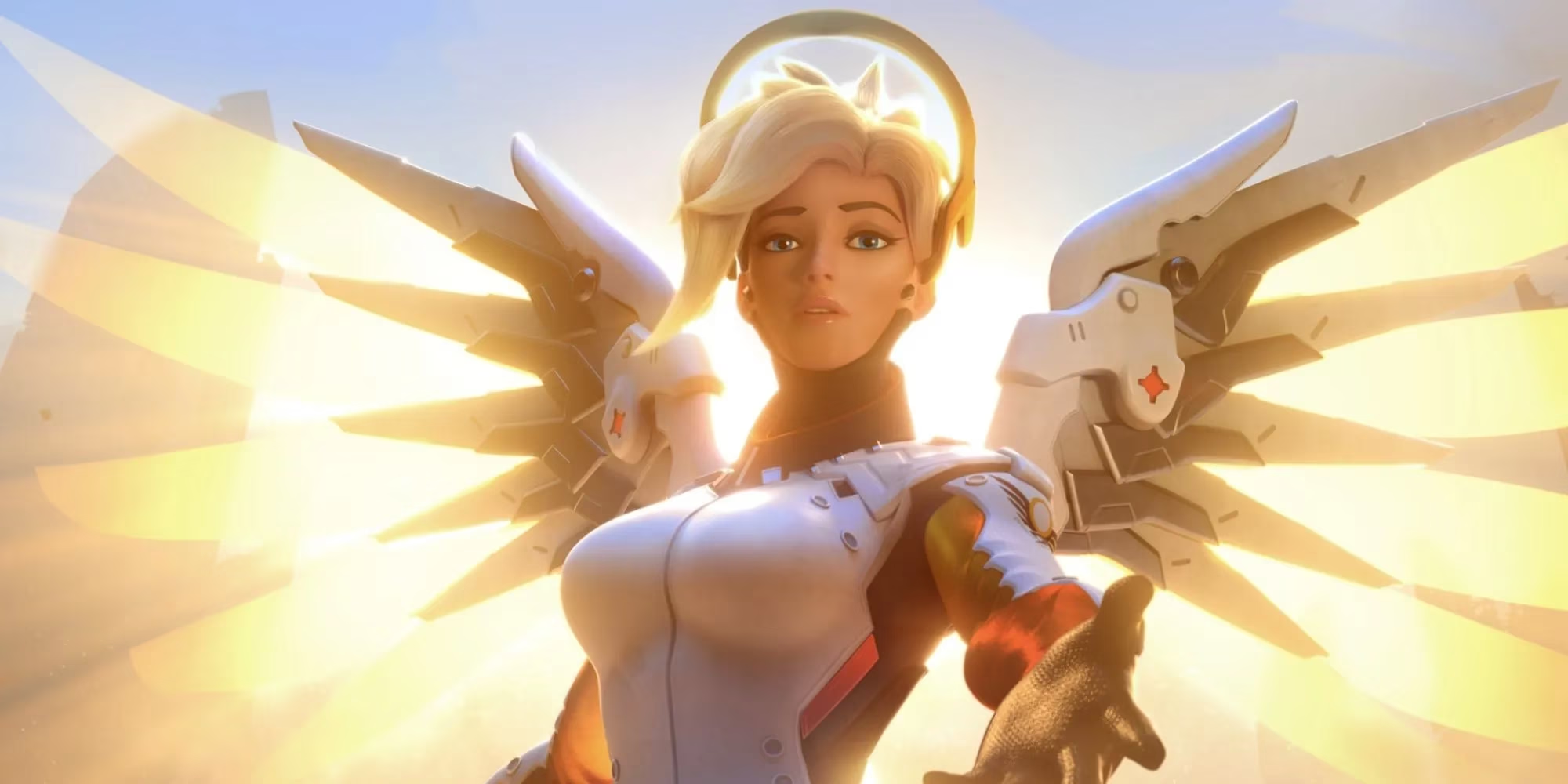
The interview with NME was a turning point. Keller acknowledged what every Support main already knew: we had the “least amount of choice” out of all classes. His words weren't just placating; they were a blueprint. He emphasized that the upcoming heroes would introduce mechanics never before seen in Overwatch. I remember parsing every syllable, hoping for something that could finally make me feel less like a healbot and more like a playmaker. The community went wild speculating – some pointed to cryptic voicelines on the Midtown map, others scoured Esperança for clues. Blizzard had woven hints into the very environment, and that only fueled our obsession.
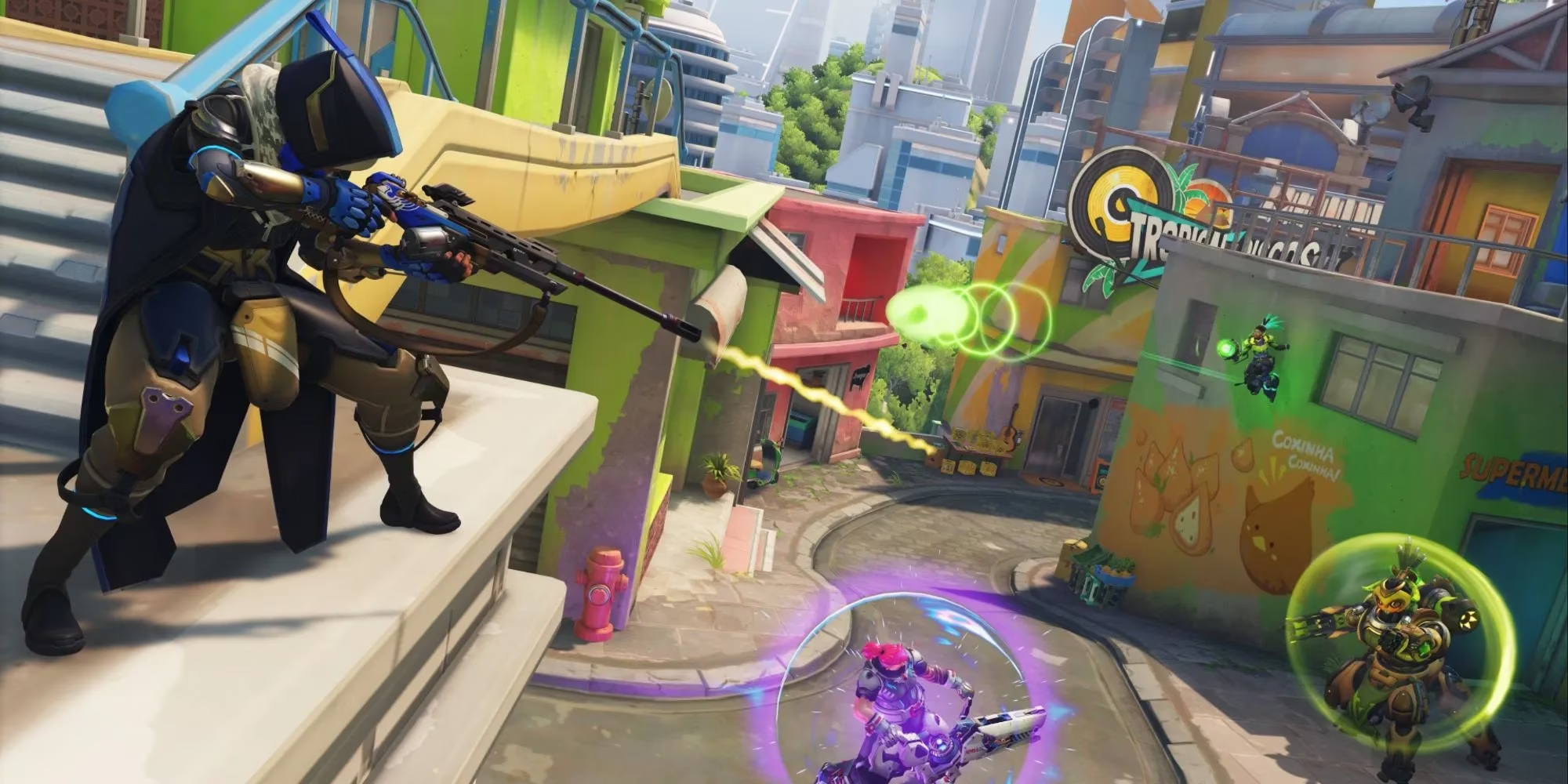
Then came the first hero. In April 2023, we welcomed Lifeweaver, a visionary Thai scientist whose kit revolved around life-giving biolight. His mechanics truly felt alien to the game – the Petal Platform could lift teammates to high ground, saving them from Earthshatters or simply enabling off-angle flanks. His Life Grip was a targeted ally pull that sparked as much controversy as it did appreciation. Being yanked out of a fight mid-ult by a well-meaning Lifeweaver became a meme overnight, but the potential for coordination was immense. I spent hours practicing the timing to pull a charging Reinhardt back from the brink or reposition an overextended Genji. Here was a Support who didn't just heal; he orchestrated the battlefield. 🌱
A few seasons later, in August 2023, Illari arrived and flipped the table again. Hailing from Peru, she wielded solar energy and introduced the first true heal-turret – the Healing Pylon. This deployable device could sustain allies in a radius while she focused on dealing damage with her Solar Rifle. Suddenly, Supports could hold angles, contribute to shield break, and still keep their team alive. Her ultimate, Captive Sun, was a massive AoE that slowed and erupted for damage. It synergized perfectly with Zarya’s Graviton Surge or Orisa’s Terra Surge, making Support ultimates feel genuinely teamfight-defining. 🌞
The impact on the Support role was seismic ⚡. Before 2023, eight heroes meant you were often pigeonholed into Lucio or Ana if you wanted to be competitive. After Illari, we had ten distinct playstyles, and the meta began to rotate in ways that rewarded creativity. The new mechanics Keller teased became the norm – Lifeweaver’s verticality tools forced map reworks and new positioning mindsets, while Illari’s pylon taught us to value off-lane pressure. I started seeing Tank and Damage players willingly flex to Support because the role finally offered the agentive, clutch potential they craved.
What excites me most in 2026 is how these heroes laid the foundation for even more innovation. Blizzard has continued to add unconventional Supports like the sound-manipulating experimental hero Echo-L (released last year) that borrow from Illari’s turret philosophy but twist it into debuff delivery. Lifeweaver’s Life Grip, once controversial, is now seen as a staple playmaker tool, and new heroes often include some form of ally repositioning. Keller’s promise of “really exciting ways of interacting with your own team” has become a design pillar, not just a headline.
Reflecting on that January 2023 announcement, I realize it was more than just a content roadmap – it was a declaration that Supports deserved to be stars. No longer the unsung backline babysitters, we became commanders of space, enablers of aggression, and scientists of survival. The wait between Ramattra and Lifeweaver felt agonizing then, but now I see it as the necessary quiet before a thunderstorm of change. And every time I step onto Midtown or Esperança, I smile at the ambient voices that once held the future of my favorite role. 🌟