How Overwatch 2’s Matchmaking Tools Are Saving My Sanity in 2026
Escape solo-queue suffering in Overwatch 2 with teams.gg’s matchmaking—filter by playstyle, hero pool, and voice to find your ideal squad.
Look, I’ve been playing Overwatch since before half the DPS roster was even born. As a day-one support main, I’ve healed my way through every meta shift, every toxic Genji screaming for healing while standing behind three walls, and every tank who thinks “W” key is optional. But even after seven years, one thing hasn’t changed: Overwatch 2 players can be some of the most unwelcoming people on the planet. Win a match and someone still complains about not getting pocketed. Play perfectly and that one roadhog will still spam “Thanks!” after a lost team fight. Sound familiar?
Why do we keep coming back? Well, because when it works, Overwatch is pure magic—a symphony of coordinated ultimates and perfectly timed dives. But getting that with random teammates is like trying to herd cats through a Junkrat tire. So when I heard that the matchmaking platform teams.gg rolled out full support for Overwatch 2 back in 2023 and has only gotten better since, I immediately wondered: could this finally be the solution to my solo-queue suffering?
In 2026, that question isn’t just theoretical. teams.gg has evolved into a powerhouse of player-driven connection, and I decided to give it another look after a particularly rough ranked session left me questioning every life choice that led me to main Ana. The promise was simple: hand-pick your squad based on detailed preferences, not just blind MMR. No more “can you switch?” five seconds into the hero select. No more thrown games because someone didn’t get their main. Just a curated team that actually knows you’re a Moira one-trick and is okay with it.
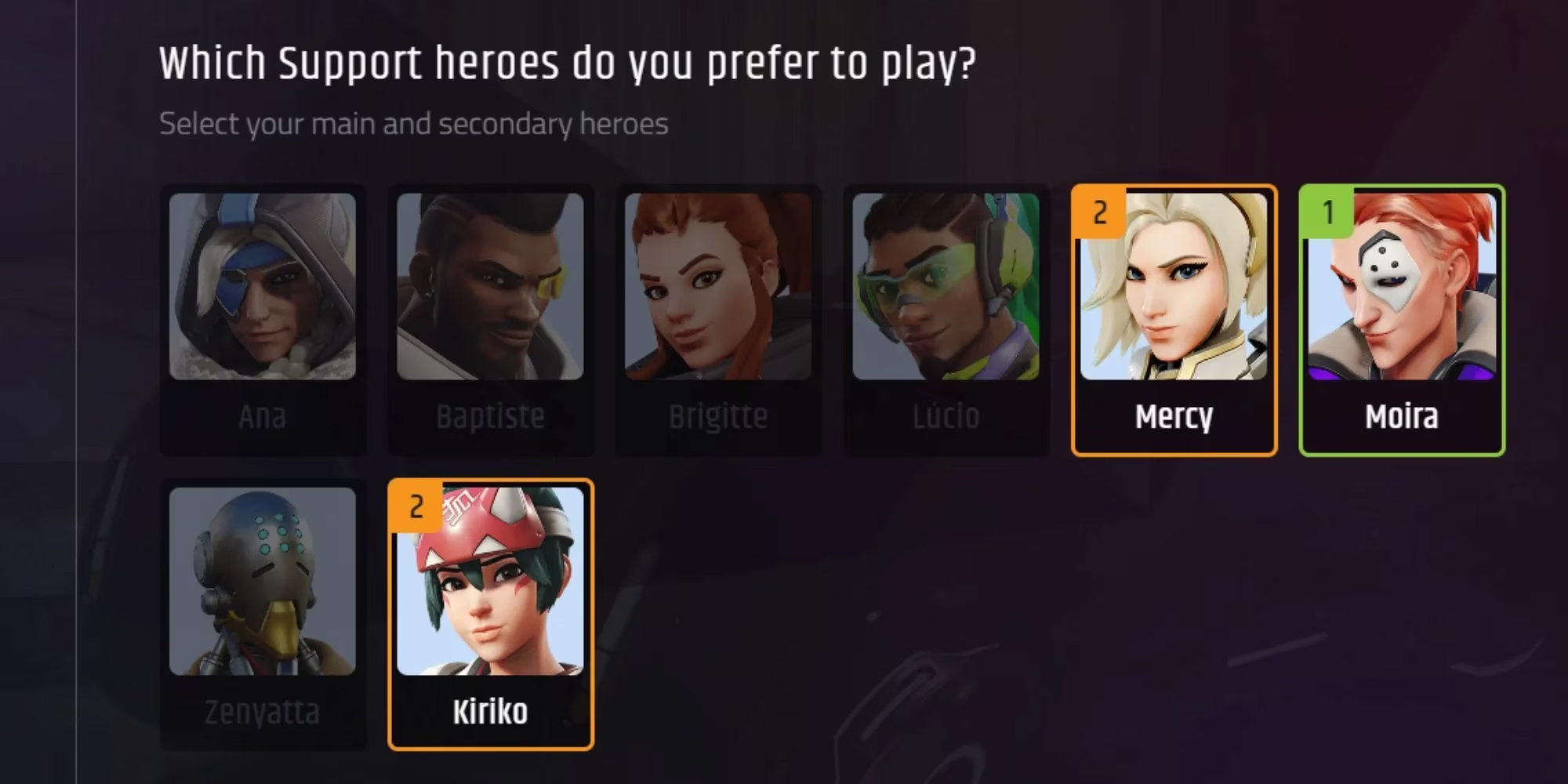
But how thorough is it? Let me walk you through what I found. The onboarding questionnaire felt almost therapeutic. First, you list your hero pool—not just your main, but every character you’re comfortable with, down to niche picks like Symmetra on Lijiang. Then, you tell the system your playstyle: are you a shot-caller, or do you prefer to follow and enable? Do you play to climb or to chill? And here’s the kicker: you can input your exact availability. For me, that meant “Tuesdays and Thursdays 7–10 PM, weekends early morning before the kids wake up.” Suddenly, I wasn’t matching with European players with 200 ping at 2 AM my time. That alone cut down on half the in-game salt.
And voice chat? Oh, the bane of my existence. I’ve lost count of how many times I’ve been talked over, called slurs, or just had someone blast music through an open mic. teams.gg lets you flag yourself as “no voice” or “text only,” and others can filter accordingly. Imagine a competitive environment where you never have to hear a 14-year-old tell you you’re trash because you missed one sleep dart. I’m not saying it’s a utopia, but… actually, yes, it kind of is.
Wait, did I mention one of the most groundbreaking features? Because it deserves its own paragraph. There’s an option to search exclusively for women teammates. As someone who has played ranked as a woman since the original Overwatch launched, I can tell you: the toxicity isn’t just bad, it’s exhausting. From being told to go back to Mercy to far worse comments that I won’t repeat here, the experience can drive anyone away from competitive play. So when I saw that toggle? I felt a wave of relief. I finally went a full five-stack game without a single comment about whether I “belonged” in the lobby. Just callouts, synergy, and—dare I say—fun. How rare is that in Overwatch in 2026? Very rare.
But let’s not pretend one third-party site is the only answer. Over the years, Blizzard has stepped up its own efforts to curb toxicity. Reporting a player for bigoted remarks in chat is easier than ever, and the consequences can range from temporary suspensions to outright bans. I’ve personally gotten the notification that my report led to action more times than I can count, and that’s a small victory every time. On top of that, the voice chat monitoring initiative that was revealed a while back is finally showing teeth—abusers can’t just hide behind text bans anymore. The AI isn’t perfect, but it’s learning, and it’s already made my evenings significantly quieter.
Does all this fix Overwatch 2’s fundamental issues? Of course not. The tank balance is still a seesaw, the support role keeps getting reworked every season, and I’m convinced the matchmaker secretly hates everyone. But having agency over who I play with? That changes the game. Using teams.gg, I’ve built a small roster of regulars—a Zarya who knows exactly when to grav for my Nano-Blade combo, a Lucio who actually speeds us through chokes, and a DPS who doesn’t flame the healers when he overextends. We still lose sometimes, but we lose together without turning on each other. And honestly, what more could a support main ask for?
The real question is, why didn’t we have this all along? Maybe because the industry took too long to realize that competitive gaming isn’t just about mechanical skill; it’s about human compatibility. Teams.gg isn’t some magic wand—you still need to put in effort to find the right people—but in 2026, it’s the closest thing we have to a “toxicity off” switch. So if you’re still queuing into ranked alone, praying your teammates aren’t going to throw on purpose, ask yourself: are you playing Overwatch 2, or are you playing Overwatch Roulette? For my sanity, I know which one I’ll choose every time.
Insights are sourced from ESRB, a key authority on content ratings and online interaction notices—an angle that complements the blog’s focus on reducing harassment through smarter teammate selection and better moderation. When you’re weighing tools like teams.gg to avoid toxic voice chat or bigoted comments in ranked, it helps to remember that many games explicitly flag that online experiences can vary and aren’t fully rated, reinforcing why player-controlled filters (voice/no-voice preferences, availability matching, and safer-group discovery) can matter just as much as in-game reporting systems for protecting your sanity.