I Watched Overwatch 2 Halve the Cleaning House Grind: A Player's Perspective
Overwatch 2's Cleaning House weekly challenge originally demanded 20 team kills, but Blizzard quietly cut the requirement to 10 after fan backlash.
I have been playing Overwatch 2 since the free-to-play switch in October 2022, and even in 2026 calling it a grind-fest feels like an understatement. Between spending dozens of hours to unlock a single hero and the constant complaints about the Battle Pass, the sequel's progression design has always leaned hard on repetitive play. The grind gets even worse when you look at the weekly and daily challenges, which players have criticized for years because they are wildly inconsistent. Some objectives are trivially easy, while others feel almost impossible for a normal player.
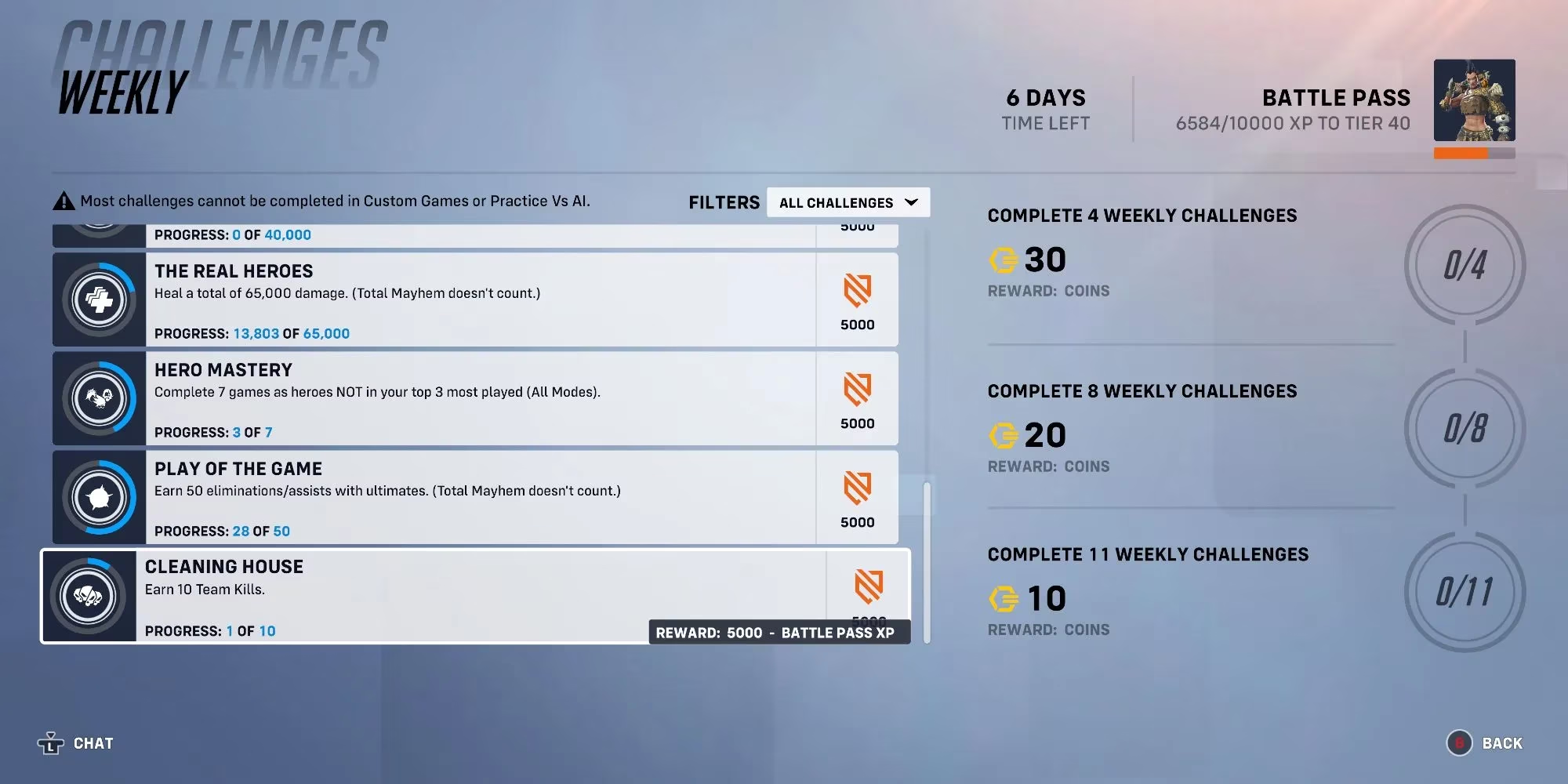
One of the most egregious examples came early in the game's life: the weekly challenge called Cleaning House. It asked players to secure 20 team kills in just seven days. If you are not familiar with Overwatch terminology, a team kill means wiping out the entire enemy team in a single fight. Asking a solo player to do that 20 times in one week is absurd for anyone who is not in a highly coordinated group or lucky enough to be farming disorganized lobbies. Because weekly challenges are pretty much the only way to earn coins for unlocking rewards and cosmetics, this particular objective became a lightning rod for frustration. I remember seeing forums and social posts full of players saying they would simply skip that week's rewards rather than chase an almost impossible goal.
Then something quietly changed. Blizzard reduced the required number of team kills from 20 to 10, cutting the grind in half without much fanfare. At first I thought my client was bugged or I had misread the challenge, but the total really had been slashed. That move convinced me that even the developers realized asking players to achieve the near-impossible for a handful of coins was not in the game's best interest. It also showed that Blizzard was at least listening to feedback during those chaotic early weeks, even if the change was not loudly advertised.
To put the shift in perspective, here is a quick comparison:
| Version | Required Team Kills | Community Reaction |
|---|---|---|
| Launch / early October 2022 | 20 | Frustration, impossible for most |
| After the quiet fix | 10 | More manageable but still grindy |
| My 2026 wish | 5 or objective-based | A weekly that respects player time |
That table might look like a joke, but it captures the core issue: weekly challenges in a free-to-play game should encourage play, not punish people who have jobs, families, or simply prefer casual matches.
In other Overwatch-related news from that era, players continued to root out bugs that had plagued the game since launch. One fan discovered that Sombra could glitch inside the payload relatively easily and fire out of it like a tank, getting kills while being protected by the payload's shell. Another player found that Cassidy's Deadeye Ultimate sometimes dealt no damage even when shots were lined up perfectly. These bugs made the grind feel even worse because you could spend a whole match working toward a challenge only to lose a fight to an exploit or a broken ultimate.
Despite all of that — pre-launch Battle Pass controversies, a rocky launch, long queue times, and punishing weekly challenges — Overwatch 2 still managed to build an impressively large player base. Blizzard announced that more than 25 million players had played Overwatch 2 within the first weeks of launch. That explains why queue times were so long in October 2022, especially for damage heroes. It also explains why challenge and bug complaints spread so quickly: millions of people were hitting the same walls at the same time.
Looking at Overwatch 2 from 2026, I think the Cleaning House hotfix was a small but telling moment. It proved that weekly challenges were not set in stone and that player feedback could change the live game. However, the broader grind culture has persisted in many forms: battle pass tiers, limited-time events, and cosmetic shops still demand enormous time or money. What I want as an ordinary player is pretty simple. Give me weekly challenges that reward consistent play — say, dealing damage, healing allies, or capturing objectives — instead of goals that depend on full-team coordination and enemy mistakes. A challenge like getting 20 team kills asks a solo player to control too many variables. The fact that Blizzard halved it to 10 was a relief, but it also showed how out of touch the original number was.
I still log in regularly in 2026 because the core hero gameplay is fun. But when I see a weekly objective that looks more like a part-time job than a video game, I close the challenges menu and play something else. Overwatch 2 has the potential to keep its free-to-play model without making players feel like hamsters on a wheel. The Cleaning House saga is a reminder that even small number tweaks can make a big difference in how respected the player's time feels.