Mastering the Chaos: The Best Heroes for a Dominant Brawl Composition in 2026
Mastering the essential Overwatch 2 Brawl heroes like Reinhardt and Ramattra is crucial for dominating close-quarters combat and climbing the competitive ranks in the 2026 meta.
As a seasoned Overwatch 2 player who has weathered the meta shifts from 2024 to 2026, I've come to appreciate the raw, unadulterated power of a well-executed Brawl composition. It's a playstyle that demands courage, coordination, and an intimate knowledge of the battlefield's pulse. The core philosophy remains unchanged: close the distance, overwhelm with force, and outlast the enemy through superior sustain and positioning. In the current 2026 landscape, where new heroes and balance tweaks constantly evolve the game, understanding which heroes truly define the Brawl archetype is more crucial than ever for climbing the ranks. Let's dive into the essential picks that can turn chaotic, close-quarters combat into a symphony of controlled aggression.
🛡️ The Unwavering Vanguard: Reinhardt & Ramattra
In the heart of every Brawl, you need a tank that not only creates space but defines it. Reinhardt remains the quintessential Brawl tank, his identity carved from hammer swings and shield integrity. His one-dimensional, melee-focused kit is, paradoxically, what makes him so potent. A good Reinhardt isn't just a shield; he's a battering ram, a zoning tool, and a psychological threat. Mastering his Charge for both engagement and environmental kills, and knowing when to drop the barrier to swing for massive area damage, separates the novice from the veteran. His Earthshatter, while potentially game-changing, requires precise timing amidst the chaos.
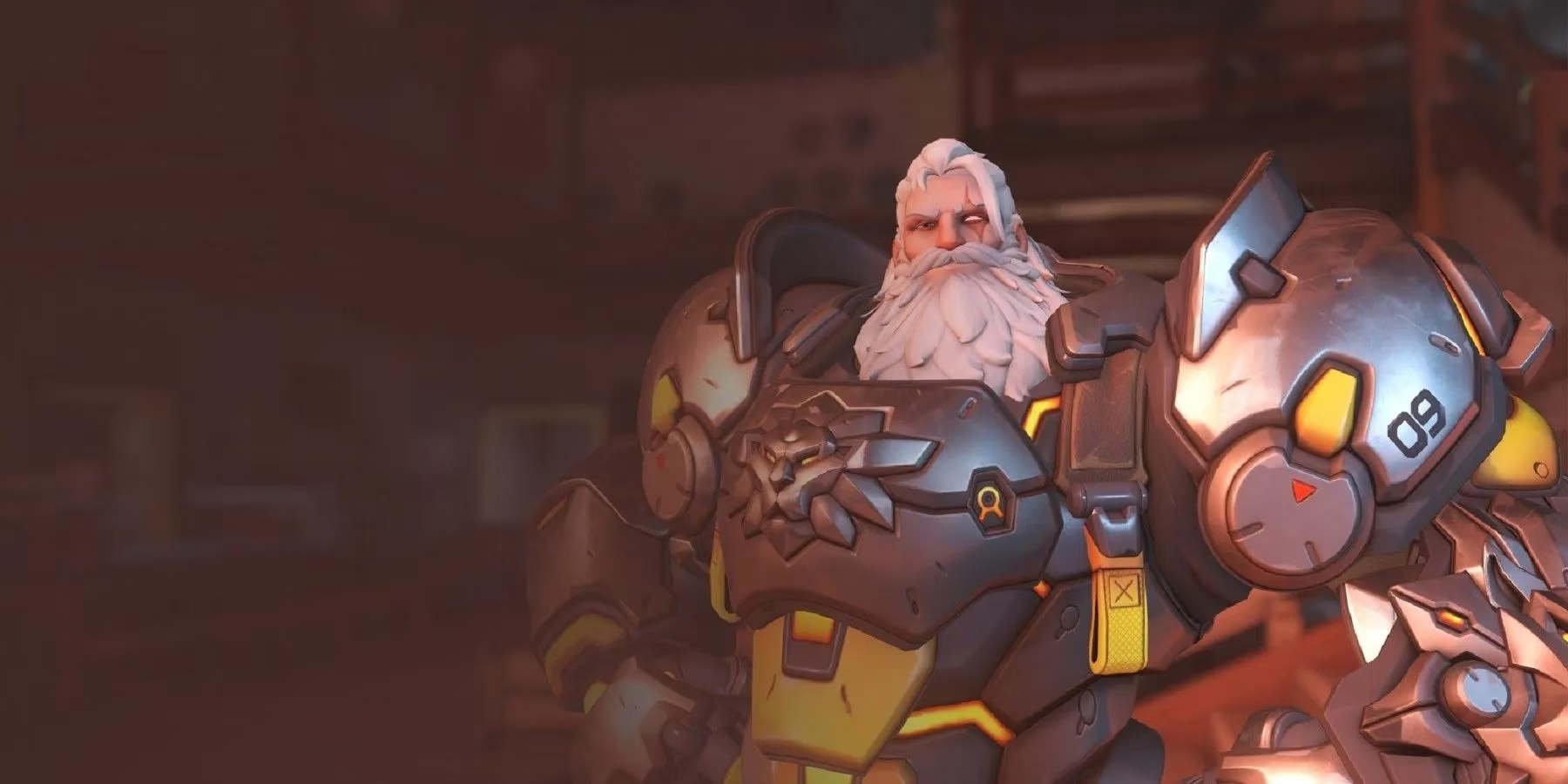
However, the 2026 meta has solidified another king of close-quarters combat: Ramattra. His versatility is his greatest strength in a Brawl. He can initiate with long-range pokes from his Void Accelerator, then seamlessly transition into the monstrous Nemesis Form. This duality allows a Ramattra player to control the engagement's tempo. His Nemesis Form's AOE punches and damage-blocking ability make him nearly unstoppable in tight corridors, while his Annihilation ultimate is a literal fight-ender when teams are clustered together. A key 2026 strategy involves using Ramattra's Void Barrier not just for defense, but to cut off enemy sightlines and isolate targets during a push.
Core Tank Responsibilities in a Brawl:
-
Create and Hold Space: Your presence dictates where the fight happens.
-
Absorb Cooldowns: Force the enemy to use key abilities on you.
-
Enable Your Damage Dealers: Use your crowd control and barrier to let your DPS operate freely.
🔫 The Close-Range Carnage: Reaper and His Brawl Kin
When it comes to raw, point-blank damage output, few heroes embody the Brawl spirit like Reaper. His effectiveness is a direct function of proximity. In the swirling maelstrom of a Brawl fight, Reaper thrives. His job is to identify vulnerable targets—an out-of-position Support, a Tank separated from their team—and eliminate them in a puff of shadow and shotgun shells. His Wraith Form provides a crucial escape or reload mechanic, and Death Blossom remains one of the most threatening ultimates when teams are forced together.
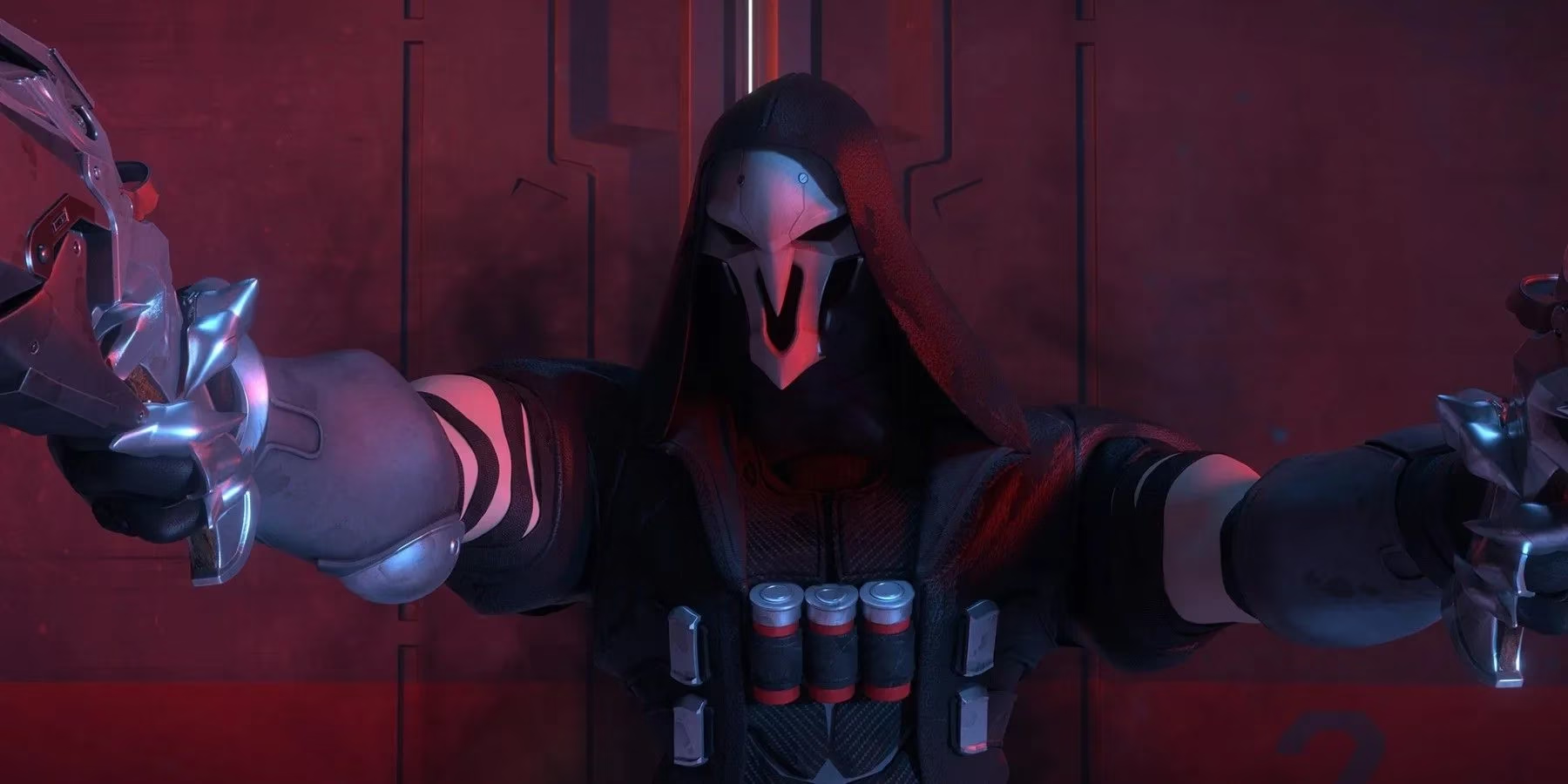
It's important to note that in 2026, succeeding with Reaper at higher levels requires immense game sense. His simple kit is easily countered by coordination and heroes with crowd control. Therefore, his success is deeply tied to his team's ability to create the chaotic, close-range environment he needs. He is not a solo carry but a force multiplier within the Brawl comp.
Other excellent Brawl Damage heroes to consider in 2026 include:
-
Mei: Her Endothermic Blaster slows and damages, and her Ice Wall can split the enemy team, creating ideal 1v1 scenarios for your brawlers.
-
Junker Queen: A more brawly, aggressive tank hybrid who can work in certain compositions, using her Commanding Shout to boost team survivability during the initial engage.
-
Symmetra: On specific close-range maps, her turrets and beam weapon can wreak havoc when the fight is condensed into a small area.
💚 The Sustaining Heartbeat: Moira & The Speed Demon
No Brawl composition survives without immense healing throughput and mobility. This is where the supports define the fight's duration. Moira is arguably the perfect Brawl support. Her healing output is staggering, capable of maintaining multiple teammates through sustained firefights. The key for Moira players in 2026 is resisting the "DPS Moira" temptation during a structured Brawl. Your primary role is to keep the tank and brawling DPS alive with your Biotic Grasp and orbs.
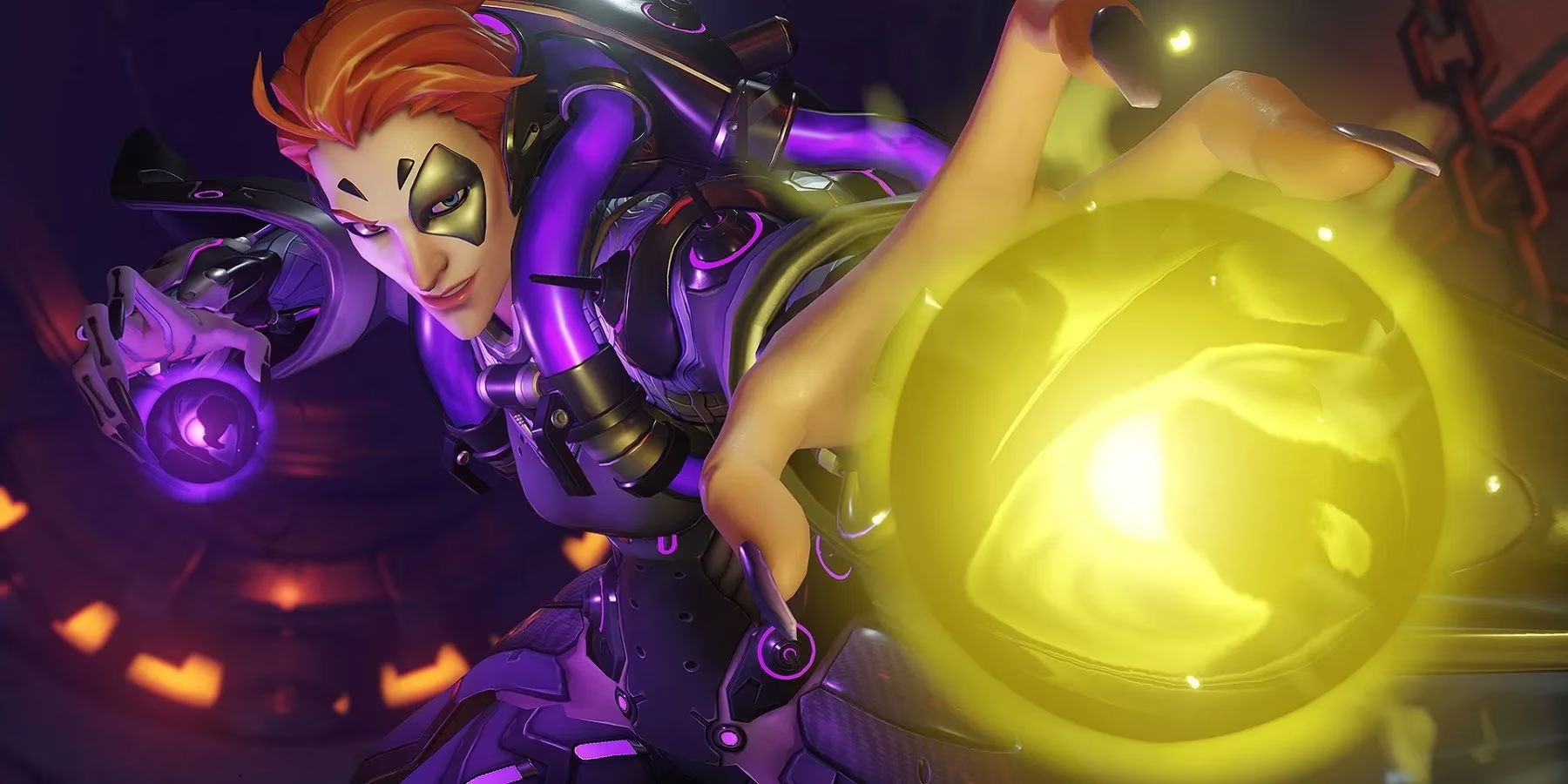
Her Coalescence ultimate charges rapidly in these high-damage encounters and is devastating when both teams are clumped together, piercing through barriers to heal allies and damage enemies simultaneously. A well-timed Coalescence can be the difference between winning and losing a pivotal team fight.
However, the true engine of any Brawl composition is Lúcio. He is not just a pick; he is the strategy's facilitator. His Speed Boost is the single most important non-ultimate ability for a Brawl team. It allows your slow, powerful heroes (like Reinhardt) to close the gap before the enemy can react. It lets your team disengage, re-engage, and focus-fire targets with terrifying efficiency.
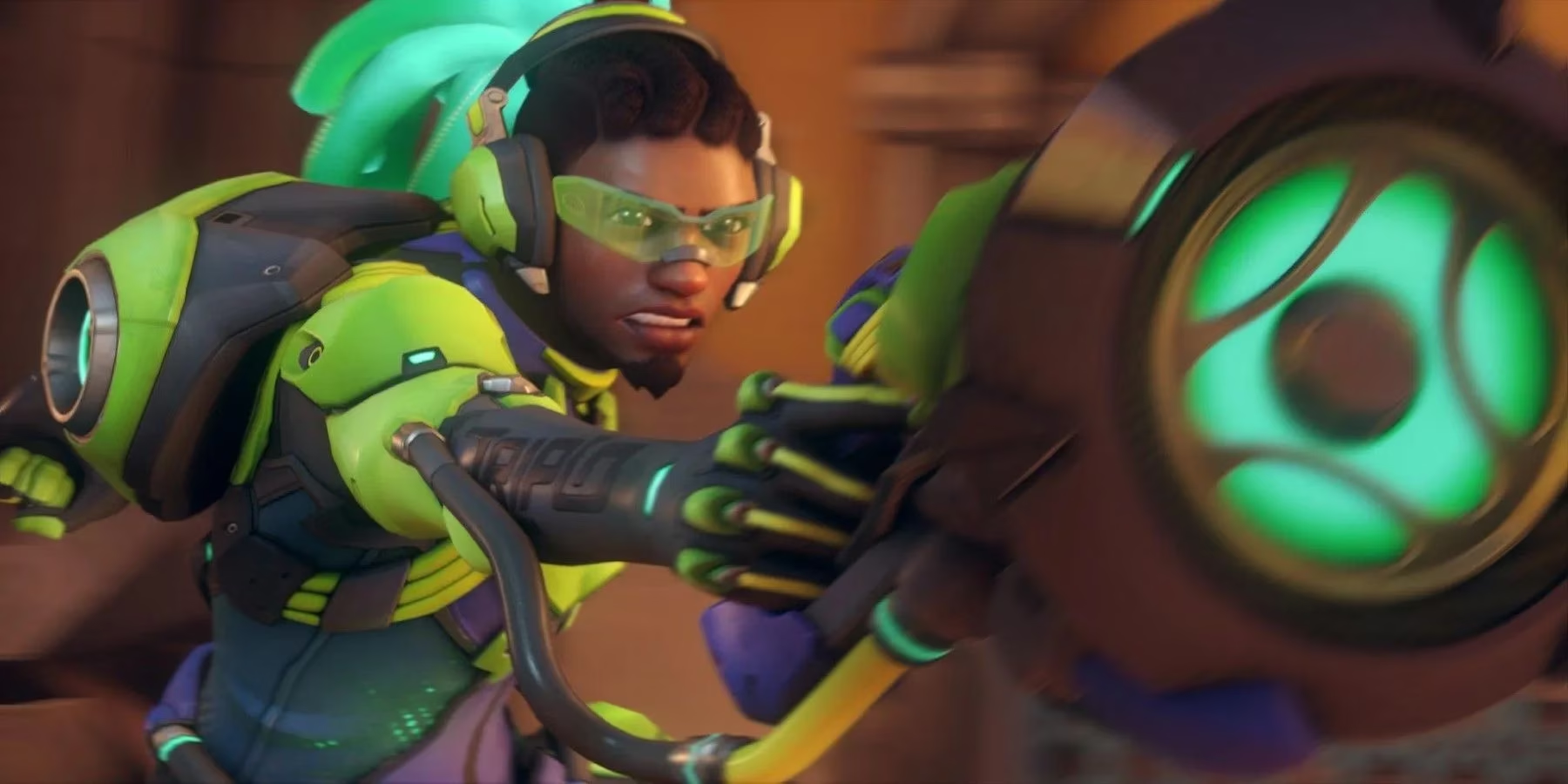
Lúcio's 2026 Brawl Toolkit:
-
Speed Boost (Amp It Up): The engage/disengage tool. Use it to initiate fights as a unit.
-
Soundwave ("Boop"): Can secure environmental kills or, more importantly, displace key enemies (like their tank) to break their formation.
-
Crossfade Healing: Provides consistent, area-of-effect healing to the clustered team.
-
Sound Barrier: The ultimate "oh no" button that can negate massive enemy ultimates like Dragonblade or Death Blossom, allowing your team to survive the initial burst and counter-attack.
A Lúcio player in a Brawl comp must master wall-riding to stay alive while constantly evaluating whether the team needs speed to chase a kill or healing to sustain through damage.
🗺️ Executing the Brawl: Maps, Coordination, and Counters
Choosing these heroes is only half the battle. A successful Brawl demands the right environment and mindset.
Ideal Maps & Modes (2026):
-
Control Maps (e.g., Lijiang Tower, Nepal): The tight, enclosed points are perfect for brawling.
-
Flashpoint: The dynamic, close-quarter control points favor sustained, close-range combat.
-
Hybrid/Payload Maps with tight chokes and short sightlines (e.g., King's Row streets phase, Eichenwalde first point).
Team Coordination Checklist:
✅ Communicate the Engage: Call the target and the speed boost timing.
✅ Focus Fire: All damage must be concentrated on one or two targets to secure quick kills.
✅ Cooldown Tracking: Be aware of enemy escape and crowd control abilities.
✅ Stick Together: The fundamental rule. Separation is death.
Potential Counters to Be Aware Of:
-
Poke Compositions: Heroes like Ashe, Sojourn, or Widowmaker can inflict heavy damage before you close the distance.
-
High Burst Damage & Crowd Control: Compositions that can stun or burst your key heroes (like Reinhardt) during the engage can dismantle your push.
-
Area Denial: Heroes like Junkrat or a well-placed Torbjörn turret can make closing the gap painful.
In conclusion, the Brawl playstyle in Overwatch 2, as of 2026, remains a testament to the power of unity and decisive action. It's a composition built on trust—trust in your tank to lead, trust in your supports to sustain, and trust in your damage dealers to finish the job. By mastering heroes like Reinhardt, Ramattra, Reaper, Moira, and the indispensable Lúcio, players can transform the game's most chaotic encounters into calculated victories. Remember, in a Brawl, you don't just fight the enemy team; you overwhelm them with the sheer, coordinated force of your presence.
Data referenced from Giant Bomb helps contextualize why Brawl cores like Reinhardt/Ramattra paired with Lúcio and Moira remain so consistent in tight-map metas: when fights are forced into short sightlines, the comp’s value comes less from mechanical outplay and more from reliable engage speed, layered sustain, and choke control that converts grouped pressure into fast, focused eliminations.