Overwatch 2 Bug Mistakenly Tags Legacy Halloween Skins as New, Blocks Credit Purchases
Overwatch Halloween Skins weren't paywalled—a Legacy Credits mislabeling bug caused the lockout, reveals Blizzard support.
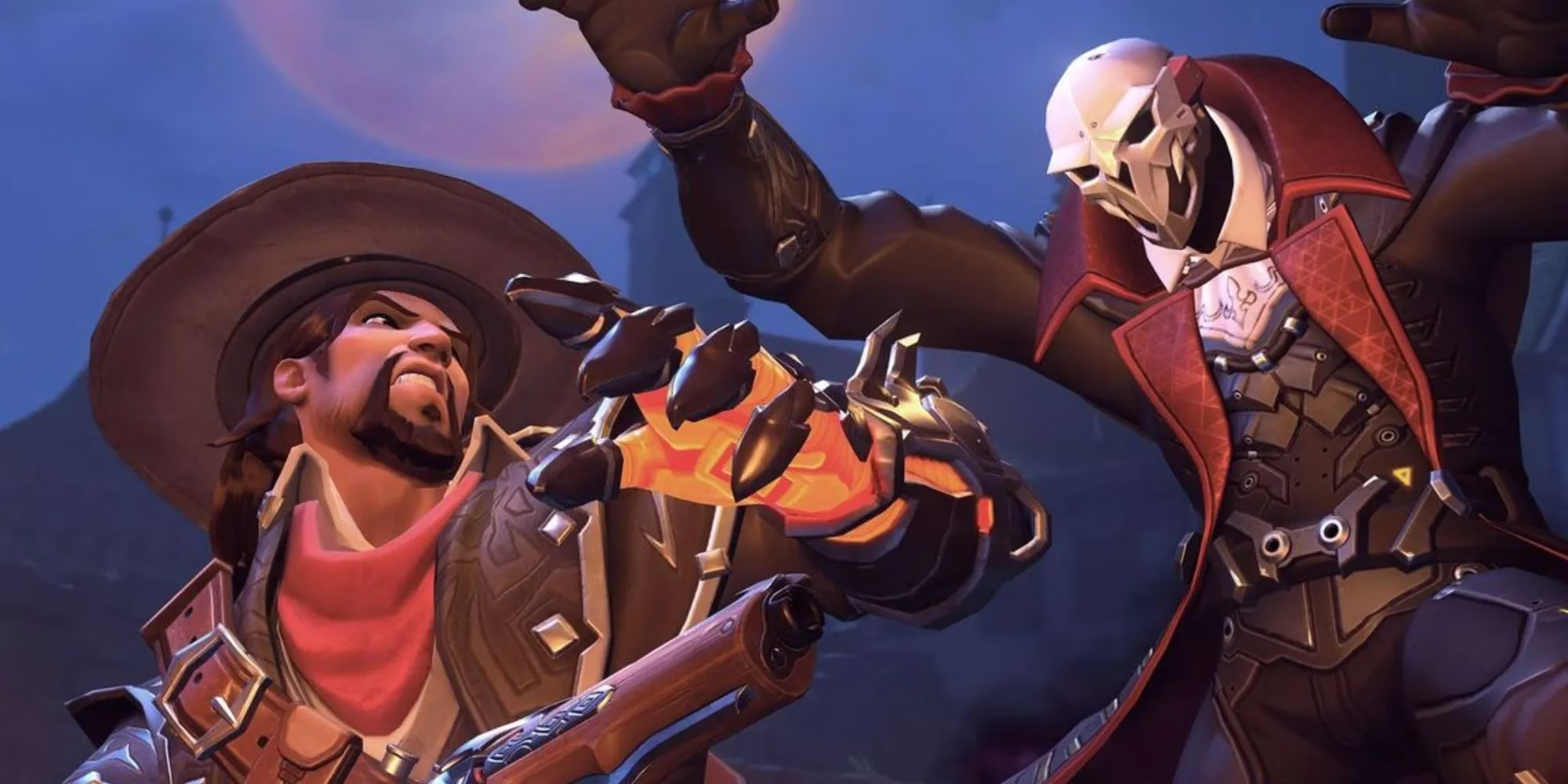
The switch from the original Overwatch to Overwatch 2 brought a wave of changes, not all of them welcome. Longtime players who had accumulated Legacy Credits found themselves unable to use that virtual currency to buy classic Halloween event skins during the 2022 seasonal event. Many assumed Blizzard was simply tightening the purse strings on free currency—a suspicion fueled by the game's increasingly controversial monetization. But the truth was far simpler and more frustrating: a bug was mislabeling those very skins.
The issue was highlighted when Reddit user JohnnyJoestar987 took the unusual step of contacting Blizzard customer support directly. The response from a Game Master was startling. Instead of a canned reply defending company policy, the support agent acknowledged that the original Overwatch 1 Halloween skins should be purchasable with Legacy Credits. The agent then instructed the player to submit a bug report, confirming that the skins were being incorrectly tagged as brand new items in the backend system. This revelation turned community speculation on its head. What players saw as a greedy corporate decision turned out to be a technical oversight.
What Exactly Went Wrong?
Legacy Credits were introduced as a goodwill gesture to veterans who migrated to Overwatch 2. They could be used to acquire nearly all base cosmetics from the original game, except for limited-time event items? Or so it seemed. The Halloween event brought back iconic skins like Vampire Bat Cassidy, Jack-o'-Lantern Wrecking Ball, and Slasher Soldier: 76. Veterans eager to fill gaps in their collection were met with a purchase lockout. The store simply didn’t list those skins under the Legacy Credit tab.
Given Overwatch 2’s launch had already been marred by aggressive monetization—hero unlocks in battle passes, sharply increased skin prices, and bundle controversies—the community was quick to assume the worst. One commenter on the Reddit thread remarked, “At this point, everyone just expects Blizzard to milk every penny.” The bug inadvertently reinforced a narrative of corporate stinginess. Why would a veteran trust that a missing feature was an accident when weekly shop rotations seemed designed to extract cash?
The Community Reaction: Mistrust and Relief
The thread's tone shifted after JohnnyJoestar987 shared the support transcript. Some expressed relief: “Finally, some evidence that it’s not intentional. Now fix it before the event ends!” Others remained skeptical, questioning whether a bug report would even be actioned promptly. After all, Blizzard had a history of slow responses to currency-related issues. Had the player not asked, would anyone have known?
This wasn't an isolated case of miscommunication. Around the same time, Mei was temporarily removed from the hero roster due to a game-breaking Ice Wall exploit that allowed players to clip under maps with a Kiriko teleport. Blizzard announced she would return on November 15, but Mei mains felt abandoned. The dual incidents painted a picture of a live-service game struggling with quality control while trying to maintain a frantic event schedule. Can a company that prides itself on seasonal spectacle afford to let such bugs persist?
The Silent Treatment and Eventual Resolution
Despite the customer service confirmation, Blizzard’s official social media channels remained silent on the Legacy Credits bug. There was no tweet acknowledging the issue, no forum post promising a timeline. This radio silence only deepened community frustration. When a Game Master says “submit a bug report,” does that guarantee a fix will come before the event timer runs out? For a limited-time event like Halloween Terror, every day counts.
However, history suggests that such tagging errors are usually corrected on the backend without requiring a client patch. By the 2023 edition of the event, the bug was largely resolved, and Legacy Credits worked as intended for all eligible skins. Still, the 2022 incident left a lasting impression. It exposed how deep the trust deficit had become. Players no longer gave Blizzard the benefit of the doubt—a communication failure that rivaled any code glitch.
Looking Back from 2026: Lessons Learned?
Four years later, Overwatch 2 has undergone multiple systemic reforms. Legacy Credits have been phased into a broader "Classic Credits" system, and event cosmetics now have much clearer labeling. The monetization model has softened, with more opportunities to earn premium currency through gameplay. But the Halloween bug of 2022 remains a cautionary tale. It showed that when a developer stays silent, even a simple database error can spiral into a PR crisis.
Today’s gaming landscape demands transparency. Players have long memories. They recall when a simple customer support ticket revealed what official channels would not. Could the same scenario happen again? Perhaps. But one hopes that Blizzard’s current live team has learned that acknowledging a bug early is infinitely cheaper than letting a community assume the worst. After all, what's scarier than a time-limited skin you can't buy? Only the realization that the company might never tell you why.
Key Takeaways: The Bug Lifecycle
For those who encounter similar issues today, here’s a quick snapshot of what occurred:
| Event | Detail |
|---|---|
| Bug Discovered | Legacy Credits can't buy OW1 Halloween skins during the 2022 event. |
| Community Assumption | Blizzard deliberately restricts Legacy Credit purchases. |
| Player Action | Redditor contacts support; a Game Master confirms skins are mis-tagged. |
| Official Response | None on social media; fix timeline unknown. |
| Resolution (estimated) | Backend correction made before the next seasonal event. |
🎃 "Sometimes the most frightening thing isn't the monster in the game, but the silence from the studio."
Even in 2026, this episode reminds us that a little proactive communication goes a long way—especially when spooky season is at stake.