Overwatch 2 Developer Reveals Which Ranks Are Most Toxic and Prone to Leavers
Overwatch 2 competitive toxicity peaks in Gold and Platinum ranks, challenging players in Season 13 with disruptive behaviors and intense frustration.
Climbing the competitive ladder in Overwatch 2 presents a significant challenge, and recent insights from a developer have shed light on which ranks are plagued by the highest levels of toxicity. As the game progresses through Season 13: Spellbinder, these revelations offer competitive players a clearer picture of the potential hurdles they may face during their grind. The issue of online toxicity in multiplayer games is a longstanding one, and Overwatch 2 has consistently grappled with managing disruptive behavior since its launch. The community frequently encounters problems such as players leaving matches, going AFK, or exhibiting extreme anger and toxic communication. Over the years, Blizzard has implemented various measures to combat these issues within its competitive playlists. For instance, Season 13 introduced significant updates to the Overwatch 2 scoreboard, empowering players with enhanced tools to report, mute, and adjust the volume of individual teammates. Despite these concerted efforts, completely eradicating negative behavior from online matches remains an elusive goal.
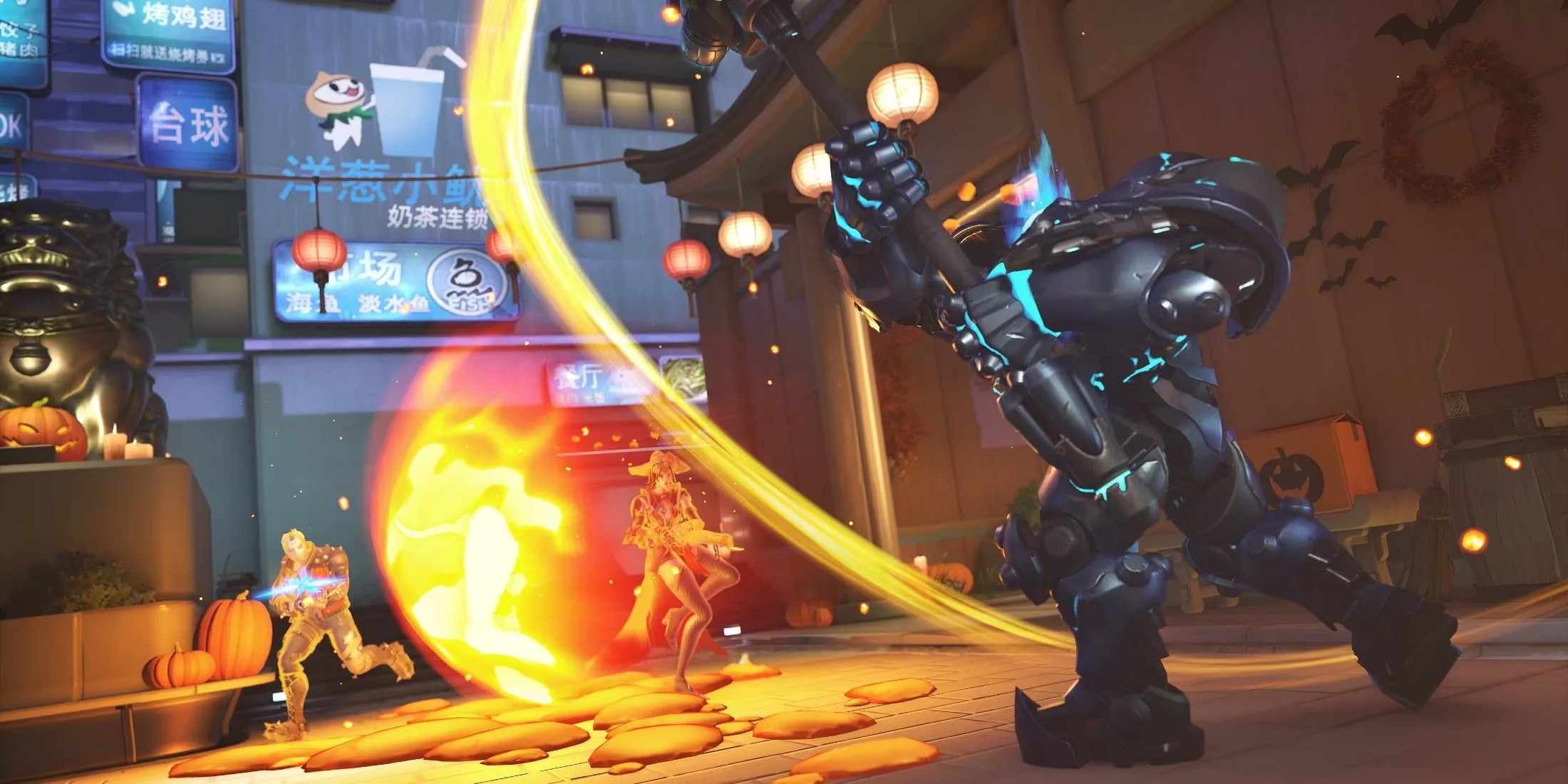
Senior Systems Designer Gavin Winter recently provided valuable data on the correlation between competitive ranks and problematic player behavior during a Twitch stream with Coach Spilo, a well-known Overwatch 2 streamer and coach. Winter's analysis revealed a clear pattern: the frequency of players leaving matches decreases as one ascends the competitive ladder. This suggests that higher-ranked players demonstrate greater commitment to seeing matches through to their conclusion. However, the data on general toxicity, which includes abusive chat, harassment, and disruptive in-game actions, followed a distinctly different and more surprising trend.
Key Findings on Rank-Specific Toxicity:
-
Leaver Rates: Highest in lower ranks, decreasing progressively in higher tiers
-
General Toxicity: Peaks in the middle ranks (e.g., Gold, Platinum)
-
Comparative Calm: Both lower and higher ranks exhibit relatively fewer toxic incidents
Winter specifically noted, "Near the middle, that's where you get more disruptive behavior." While he did not elaborate on a definitive cause for this concentration of toxicity, it is easy to hypothesize that the heightened pressure and frustration associated with attempting to break into the upper echelons of competitive play contribute to this phenomenon. Players in these middle ranks are often highly motivated to advance but may lack the consistent skill or teamwork required, leading to increased tension and blame within teams.
| Rank Tier | Leaver Frequency | Toxicity Level | Overall Experience |
|---|---|---|---|
| Bronze/Silver | High 🚪 | Moderate 😠 | Often chaotic |
| Gold/Platinum | Medium 🚪 | Very High 🔥 | Highly volatile |
| Diamond/Master | Low 🚪 | Medium 😠 | Generally stable |
| Grandmaster/Top 500 | Very Low ✅ | Low 🙂 | Most consistent |
The ongoing battle against toxicity is a complex one. Blizzard's future measures to address these issues will be closely watched by the community. In a highly competitive environment like Overwatch 2, negative behavior is an unfortunate reality that rarely improves a team's chances of victory. In fact, toxicity often exacerbates a struggling team's situation. While fair and efficient reporting systems for leavers and excessively toxic players can help mitigate problems, a complete solution is unlikely. The very nature of competitive gaming, with its emphasis on rank and performance, creates a fertile ground for frustration to manifest as toxic behavior.
Alongside its efforts to improve the competitive experience, Blizzard has also been experimenting with alternative game modes. A recent addition was a new version of Quick Play: Hacked for Overwatch 2. This limited-time mode, called Limit 2, altered the standard team composition rules by allowing for an extra tank at the expense of a healer or damage character. Such experimental modes not only provide variety but also serve as testing grounds for potential changes that could influence the broader game environment and player dynamics. The developer has plans to introduce more of these innovative modes in the future, indicating a multi-faceted approach to keeping the game fresh and engaging while simultaneously working on its core social challenges.