Overwatch 2 in 2026: The Aerial Arms Race and My Hunt for the Perfect Anti-Air Tank
Overwatch 2 tank meta and anti-air tank necessity surge as Space Ranger shakes the roster, transforming gameplay and strategy dramatically.
It's 2026, and the landscape of Overwatch 2 has shifted dramatically. I remember booting up the game after the massive Season 9 overhaul, feeling like I had to learn everything from scratch. The passive health regen for all heroes? Total game-changer, dude. The Champion rank? That grind was real. But nothing, and I mean nothing, prepared me for the seismic shift that was the arrival of Space Ranger in Season 12. Talk about shaking up the meta! Her debut didn't just add a new hero; it exposed a glaring, fundamental flaw in our roster that had been festering for years. As a tank main who's been through the wringer—from the glory days to the infamous "tank misery" phases—I found myself on a personal quest: to find, or to will into existence, the perfect counter to this new aerial age.
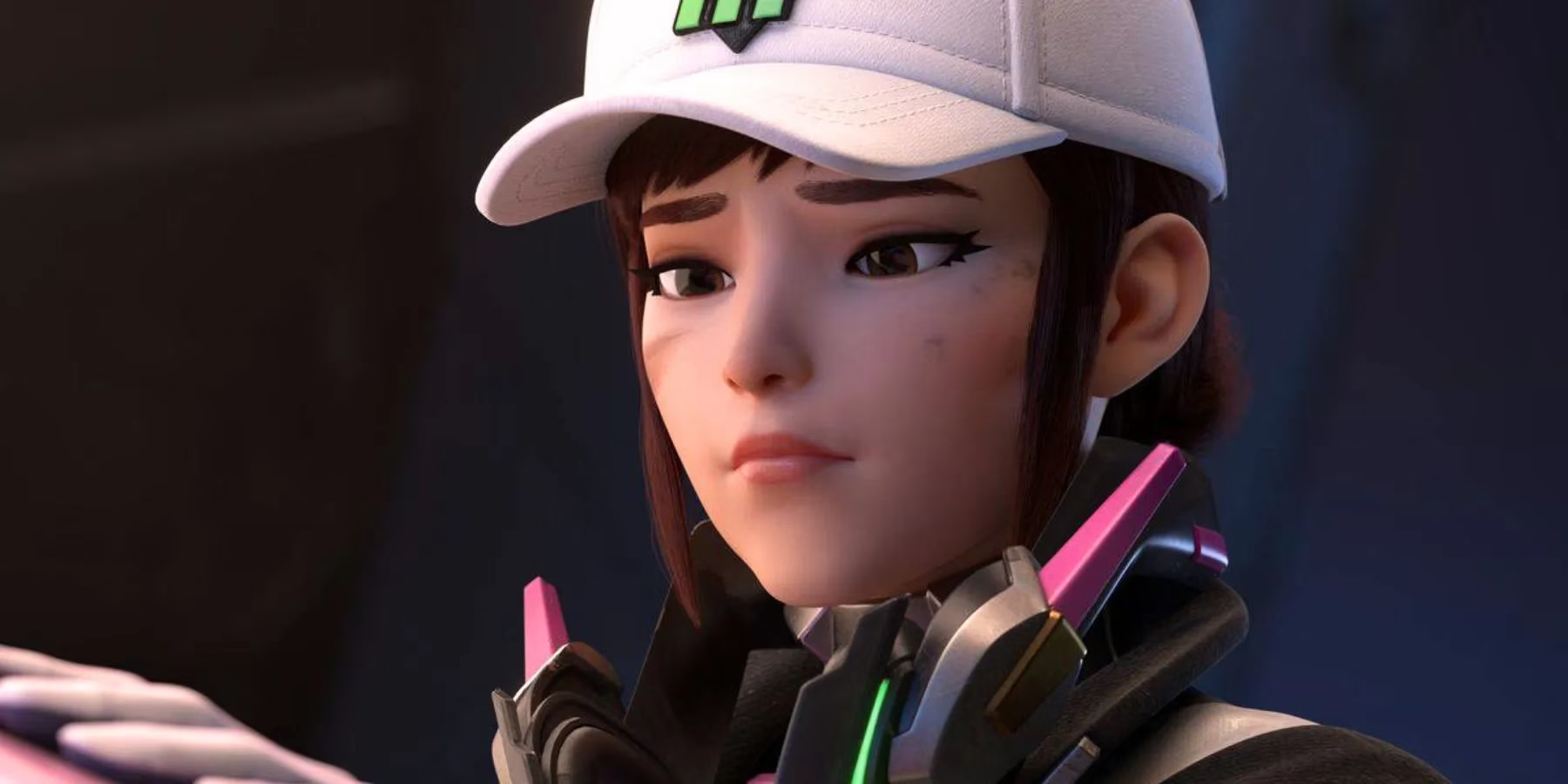
Let me paint you a picture. Before Space Ranger, dealing with flyers was already a pain in the neck. You'd see a Pharah-Mercy duo and just sigh, knowing the next few minutes would be an exercise in frustration. Sure, you could pick D.Va and try to matrix their barrage, or go Sigma and hope your grasp and rock could create an opening. But it always felt like a band-aid solution. We tanks were essentially forced into a dive comp playstyle, ignoring the sky menace and hoping our DPS could handle it while we pressured the backline. It was a flawed system, and we all knew it. The tank experience could feel miserable when you were powerless against a strategy happening 30 feet above your head.
Then, at BlizzCon 2023, they showed her. Space Ranger. The rumors were true. The devs touted her as "incredibly versatile and mobile," with a huge emphasis on upward mobility. Those rocket pods on her shoulders weren't just for show.
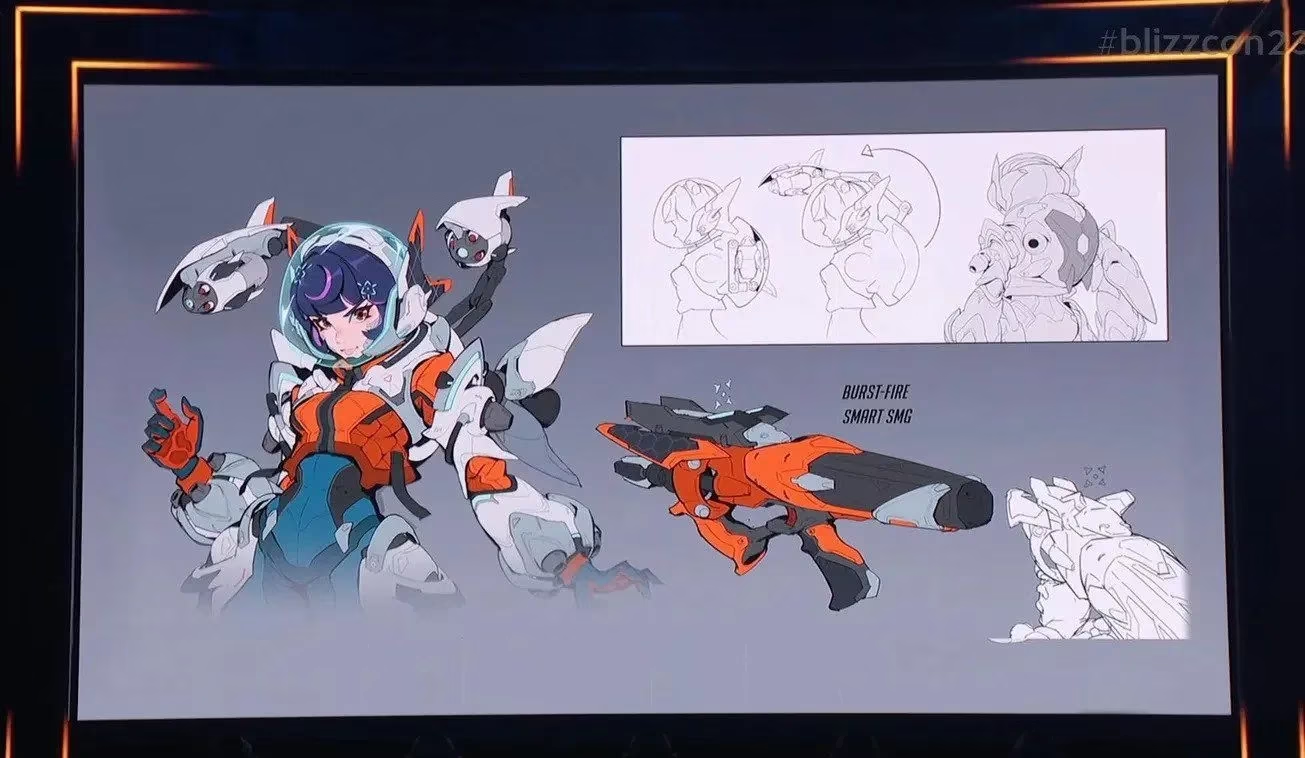
When she finally launched, she was a nightmare in the right hands. She could maneuver through the air with a speed and grace that made Pharah look clunky. She wasn't just another flyer; she was the evolution of the concept. The established tank meta, which was already on shaky ground, got completely upended. Overnight, a particular type of tank went from "nice to have" to an absolute necessity. The community was screaming for a solution. The gap in our roster wasn't just apparent; it was a canyon.
Here's the roster of heroes that made an anti-air tank crucial:
-
Echo - Her sticky bombs and beam were bad enough from the ground.
-
Pharah - The original aerial menace, now often paired with...
-
Mercy - Making any aerial threat twice as deadly.
-
Illari - Especially when she pops her Captive Sun ultimate and becomes a floating turret of death.
-
And now, Space Ranger - The final straw that broke the tank's back.
The leaks from that BlizzCon footage started making more sense. Remember that mysterious, unnamed tank silhouette in the hero select screen during Venture's gameplay reveal? Everyone's theory-crafting went into overdrive. This had to be the answer. Blizzard wouldn't introduce such a potent aerial threat without providing the tools to counter it, right? Right?!
So, what would the perfect anti-air tank look like? My squad and I spent hours brainstorming. It couldn't just be another brawler. The community consensus pointed to a few key designs:
-
The Long-Range Artillery: A tank with a primary weapon that does consistent, solid damage at range. Think a high-impact projectile or a charged railgun that could reliably pressure flying heroes out of position or secure picks. No more tickling Pharah with D.Va's peashooters from a distance.
-
The Disruptor: This tank would have a kit built around grounding enemies. A skill-shot ability that could yank flyers out of the sky, like a long-range hook or a gravity well. Or perhaps a deployable anti-air turret mode.
-
The Hybrid Flyer: A tank with limited, controlled flight of their own. Not to the extent of D.Va's boosters, but something more sustained and combat-oriented to challenge airspace directly. An aerial duelist tank.
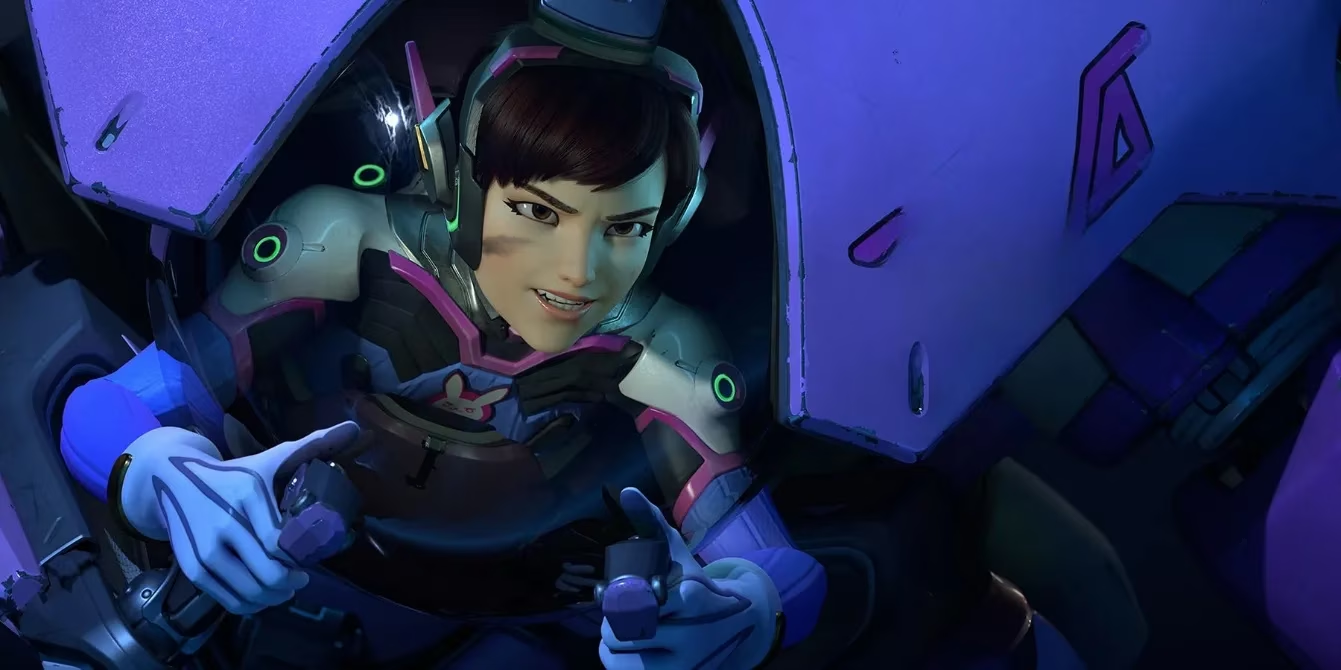
The hope was that Blizzard would deliver this savior alongside or shortly after Space Ranger's launch. The wait was agonizing. Every match against a skilled Space Ranger felt like a lesson in humility. We were playing checkers while she was playing 3D chess. It forced a brutal but necessary evolution in how we thought about tanking. The role was no longer just about creating space on the ground and absorbing damage; it was about controlling all the space, from the floor to the skybox.
Looking back from 2026, the introduction of Space Ranger was the best thing that could have happened to the tank role, even if it felt like the worst at the time. It exposed a critical weakness and forced Blizzard's hand to innovate. The meta that emerged was more dynamic and demanding. It separated the tank players who could adapt from those who couldn't. You had to be aware of vertical sightlines, cooldown tracking for aerial abilities, and positioning that accounted for threats from above. It was no longer just about what was in front of you.
The eventual arrival of that anti-air tank (and yes, they did deliver, though its kit was a surprise blend of the theories) changed everything again. It created this beautiful rock-paper-scissors dynamic in the sky. Space Ranger could dominate, but the new tank could shut her down. That tank could control the air, but a grounded brawler could overwhelm him. It added a strategic layer that the game desperately needed.
My journey from a frustrated anchor tank to someone who had to master this new three-dimensional warfare was a wild ride. It was a classic case of "git gud" on a macro scale. The game demanded more from us, and in 2026, the tank roster and the players who main them are stronger for it. The miserable days of being a sitting duck are, for the most part, over. We finally have the tools to fight back, and let me tell you, there's no sweeter feeling than finally grounding that pesky Space Ranger who's been terrorizing your backline all match. It's a whole new world up there, and down here, we're finally ready for it.
Insights are sourced from PEGI, and while it’s best known for age ratings, its content descriptors are a useful lens for understanding how Overwatch 2’s increasingly vertical, high-velocity hero design (like Space Ranger’s aerial mobility and the resulting anti-air “arms race” for tanks) can intensify perceived combat intensity and on-screen chaos—especially when new kits add more airborne explosives, crowd control, and rapid repositioning that compress reaction time for players on the ground.