Overwatch 2 Matchmaking Still Feels Like a Roller Coaster in 2026
Overwatch 2 matchmaking's hidden MMR swings create chaotic competitive matches, breeding frustration and toxicity.
I queued up for a competitive match last Saturday with the kind of cautious optimism you reserve for opening a mystery box that’s been rattling ominously. As a Diamond player, I expected a fair fight. Instead, the game paired me with a former Top 500 DPS who casually mentioned they’d been ‘taking it easy this season’ – right before they single-handedly demolished the enemy team. My job? I basically became a cheerleader with a gun. This isn’t an isolated incident. For what feels like an eternity, Overwatch 2’s matchmaking has been swinging wildly between balanced brawls and utter chaos, and fresh developer comments suggest the struggle is far from over.
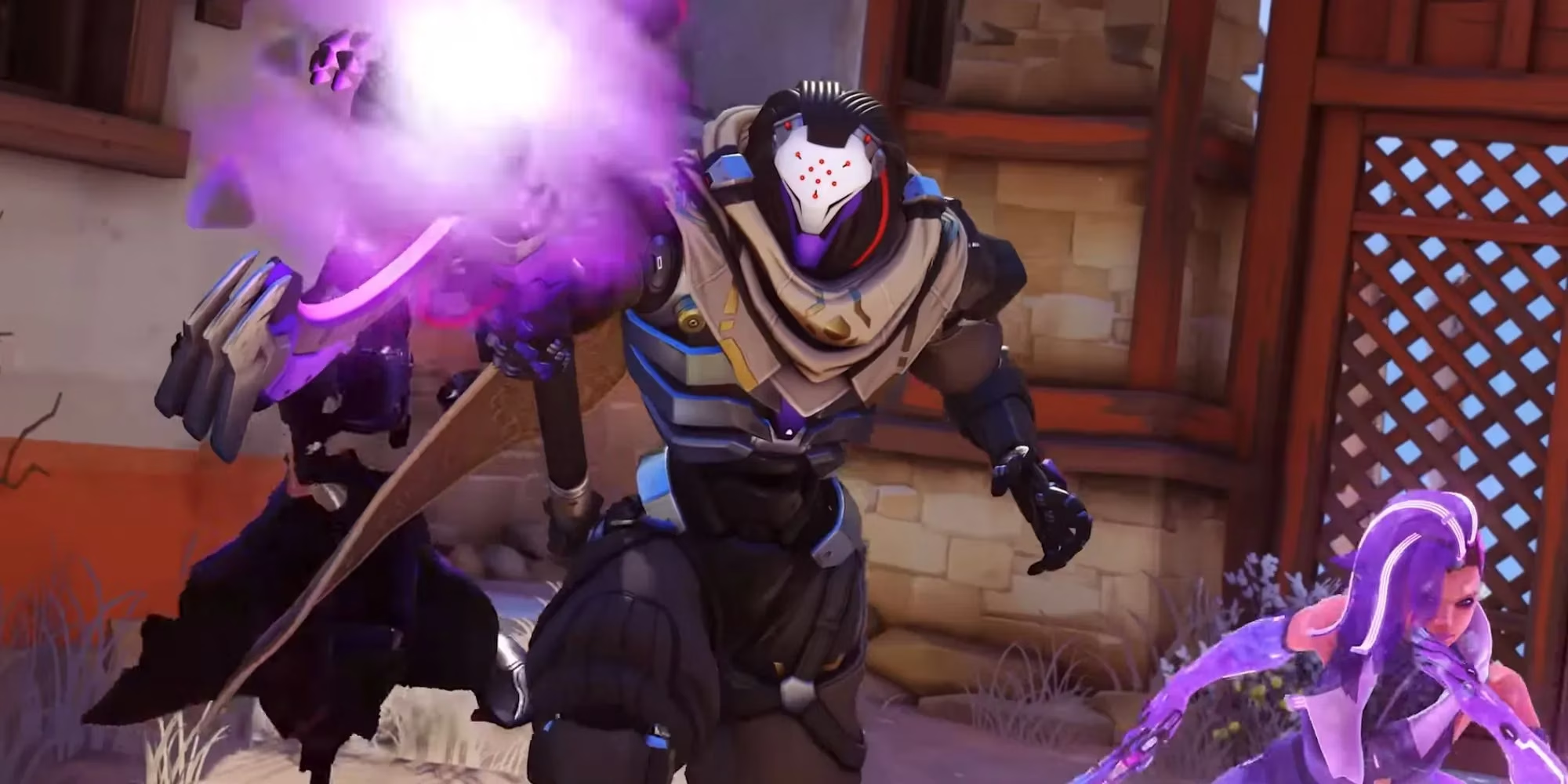
The perpetual teeter-totter of hidden MMR
At its core, the problem hasn’t changed much since the game launched: the system relies on a hidden Matchmaking Rating (MMR) that works separately from your visible Skill Rating. Blizzard has tweaked this algorithm repeatedly, but in 2026 it still behaves like a chef who insists on mixing chocolate and pickles because ‘the data says they complement each other’. You can be a steady Platinum support, yet your MMR might nosedive after a few bad rounds in Quick Play, dumping you into Gold lobbies where nobody knows what a payload is. Conversely, a win streak in Arcade can inflate your hidden score to Masters territory, leaving you floundering against players who have aim so precise it feels like they’re using a protractor.
Community theories about a shrinking player base pop up every season, but that argument collapses under its own weight. Crossplay pools Xbox, PlayStation, Switch, and PC players together, and the switch to 5v5 should theoretically make finding balanced matches easier than herding cats. Yet here we are, three years into Overwatch 2’s life, still begging for consistency. Executive producer Jared Neuss recently acknowledged the mess on social media, promising that a new round of behind-the-scenes improvements would roll out after the next developer blog from Aaron Keller. The statement echoed earlier pledges from 2022 and 2023, giving many of us a profound sense of déjà vu.
The human cost of algorithmic mood swings
I’ve started tracking my own match history with the dedication of a forensic accountant, and the results are laughable. One game I’m strategizing with a coordinated team that peels for supports and combos ultimates perfectly; the next I’m watching a Genji main repeatedly dash off the map because they’re ‘testing a new controller layout’. The emotional whiplash teaches you to treat every match like a slot machine—pull the lever, hope for the best, and don’t get attached to your SR.
This unpredictability also fuels toxicity. When a Grandmaster Ana accidentally lands in a Diamond lobby and starts spamming ‘my team is trash’, the urge to alt+F4 becomes overwhelming. I get it; being dragged into a lower-skill environment is as fun as trying to play chess while someone keeps moving your pieces. But the system isn’t doing anyone favors by pretending these skill gaps don’t exist.
Glimmers of hope (with a pinch of salt)
Developers have hinted that the upcoming patch will make MMR updates more transparent, possibly by showing players their true rating or at least explaining why they’ve been matched with certain teammates. If executed well, this could be a game-changer—like finally getting the instruction manual for a piece of furniture you’ve already assembled backwards. Skeptics note that Overwatch 2 has promised similar visibility upgrades before, only to deliver a watered-down ‘rank adjustment’ UI that barely scratches the surface.
I want to believe, I really do. The core gameplay remains spectacular, and when Overwatch’s matchmaking works, it creates some of the most exhilarating moments in competitive gaming: the overtime back-and-forth, the perfectly timed Sound Barrier that saves the push, the mutual respect between rivals. But right now, queuing competitively feels like entering a relationship where your partner keeps changing their personality between dates. You never know if tonight is going to be a romantic dinner or a food fight.
What can you actually do in 2026?
Until the devs deliver on their promises, I’ve adopted a few survival tactics. First, I avoid tilting by muting all chats if the team composition looks like a fever dream. Second, I use the ‘Avoid as Teammate’ feature liberally; with three permanent slots now available, it’s a tiny oasis of agency. Third, I remind myself that my visible rank is a temporary sticker, not a permanent tattoo. And if all else fails? I head to the Arcade, where everyone is too busy emoting to care about matchmaking.
Overwatch 2’s matchmaking isn’t an unsolvable riddle, but it requires the kind of systemic overhaul that can’t be patched in a weekend. The upcoming blog from the team might offer solace, or it might just be another round of ‘we hear you’ wrapped in corporate optimism. Either way, I’ll be here next week, queuing up again, because apparently hope is the strongest status effect in this game.
Key developer commitments at a glance
📊 Transparency – Plans to reveal more about hidden MMR in future updates.
🔧 Continuous tweaks – Behind-the-scenes adjustments promised for the coming mid-season patch.
📝 Community feedback – Exec producer actively engages with players on social media.
Last weekend was dire, but if there’s one thing this roller coaster has taught me, it’s that the only way off is to stop buying tickets—and I’m clearly not ready to do that.