Overwatch 2 Player Endures 17-Hour Matchmaking Queue, Sparking Community Debate
Overwatch 2 Role Queue exposes severe matchmaking issues, with one player enduring a shocking 17-hour wait in ranked mode.
As a dedicated player of the hero shooter genre, I've witnessed my fair share of long queue times, but a recent story from the Overwatch 2 community has left me, and many others, utterly astounded. Imagine booting up your favorite game, ready for a competitive match, only to find yourself trapped in a digital waiting room for nearly an entire day. That's precisely what happened to one player, whose friend reportedly spent a staggering 17 hours in the ranked role queue. This isn't just a minor inconvenience; it's a glaring symptom of the persistent matchmaking issues that have plagued Overwatch 2 since its transition to a free-to-play model. While many of us have grumbled about a 10 or 15-minute wait, this extreme case forces us to ask: Has the pursuit of balanced team compositions come at the cost of playability itself?
The heart of this issue lies in the game's Role Queue system. Introduced back in 2019 for the original Overwatch and carried over into the sequel, this system mandates a strict team composition: 1 Tank, 2 Damage heroes, and 2 Supports. On paper, it's a brilliant solution to the chaotic 'all-Damage' team comps that once dominated the ladder. In practice, however, it has created a significant bottleneck, particularly for players queuing for the highly sought-after Damage role. The player in this 17-hour saga was reportedly queuing for this role, highlighting the severe supply-and-demand imbalance that the system can create. The community's reaction was a mix of disbelief and dark humor, with players rebranding the game as "Queuewatch 2" or "Overqueue 2." This incident isn't an isolated glitch; it's an extreme example of a chronic problem that affects both the competitive ranked mode and the more casual Quick Play pool. Players have been vocal about these lengthy waits for years, and this story has become the poster child for their frustrations.
So, what was this player doing for 17 hours? According to the Reddit user 'PaddyPellie' who shared the story, their friend initially aimed for a 10-hour queue as a personal challenge, then kept it going "for fun." It's widely assumed they were playing another game or tending to other activities while leaving the Overwatch 2 client running in the background. The most haunting part of the tale? The original poster never confirmed if their friend actually got into a match after that marathon wait. This ambiguity turns the story from a quirky anecdote into a potent critique of the system's potential failure state. It begs the question: At what point does a queue cease to be a queue and simply become a broken state?
This matchmaking dilemma exists against a complex backdrop for Overwatch 2. The game has faced well-documented challenges with player retention since its early access launch in October 2022. Yet, there have been bright spots. The recent Season 10 update in 2025 provided a substantial, if temporary, boost. Let's break down what made Season 10 a significant moment:
-
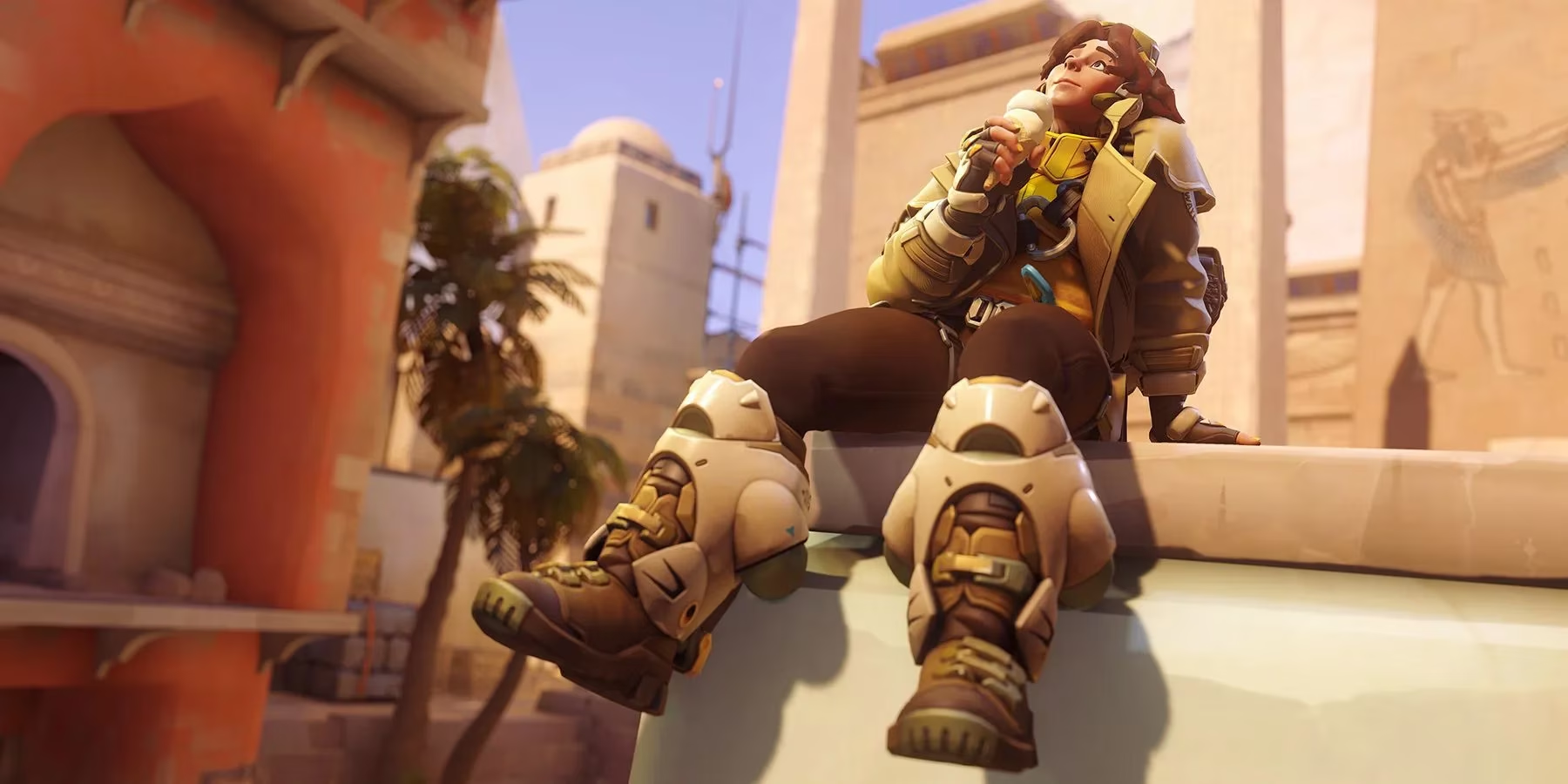
New Hero - Venture: The introduction of a new damage hero always shakes up the meta and brings lapsed players back to try them out.
-
Fresh Content: A new map and game mode offered novel experiences beyond the standard grind.
-
Systemic Improvements: A slew of bug fixes and quality-of-life updates addressed long-standing player grievances.
Data from analytics trackers like SteamDB showed a clear player count spike following this update, proving that when Blizzard delivers compelling content, the community responds. This cycle of decline and revival is a constant in the live-service world, but it doesn't fully solve the core engagement issue posed by excessive wait times. You can bring players back with a cool new hero, but if they spend more time waiting than playing, how long will they stay?
Despite these operational headaches, it's crucial to acknowledge why we all put up with the queues in the first place. When you finally get past the waiting screen, Overwatch 2 remains, in my opinion and that of many critics, one of the finest team-based shooters ever made. The shift from 6v6 to a 5v5 format in the sequel was a controversial but largely successful overhaul. It accelerated the pace of matches, reduced visual clutter, and made individual player impact more noticeable. Furthermore, the ever-expanding roster of heroes—each with unique abilities and personalities—creates an incredibly deep strategic sandbox. The game encourages constant experimentation with team synergies and counter-picks, making every match a dynamic puzzle. This core gameplay loop is so compelling that it often makes us forget the hassle it took to get there... until a story about a 17-hour queue reminds us.
Looking ahead to 2026, the path forward for Overwatch 2 is clear. The developers must find innovative ways to bridge the gap between their vision for balanced competition and the player's desire for a seamless experience. Could more aggressive incentives for playing less popular roles help? Is there room for a more flexible queue option alongside the strict Role Queue? The community's patience, while deep, is not infinite. The 17-hour queue is a stark warning: a game's legacy is built on memorable plays and thrilling victories, not on the time spent waiting for them to begin. As players, we love the arena, but we shouldn't have to live in the lobby.