Return to Silky Surf: My Journey Through Counter-Strike 2's Fluid Update
Counter-Strike 2 surfing, enhanced by Source 2 engine visuals and physics fixes, now offers smoother, immersive gameplay in 2026.
I still remember the first time I loaded up a surf map in Counter-Strike 2 back in late 2023. The Source 2 engine gave everything a fresh coat of visual polish, but the moment I tried to air-strafe down a long, winding ramp, I felt like a paper boat hitting a hidden rock in a stream—every few seconds, my momentum would snag on some invisible edge, sending me tumbling into the void. For years after that, surfing in CS2 was a love-hate relationship: the hypnotic flow of smooth gliding would lull me into a trance, only to be shattered by a phantom speed bump that felt like stepping on a Lego brick in the middle of a velvet carpet.
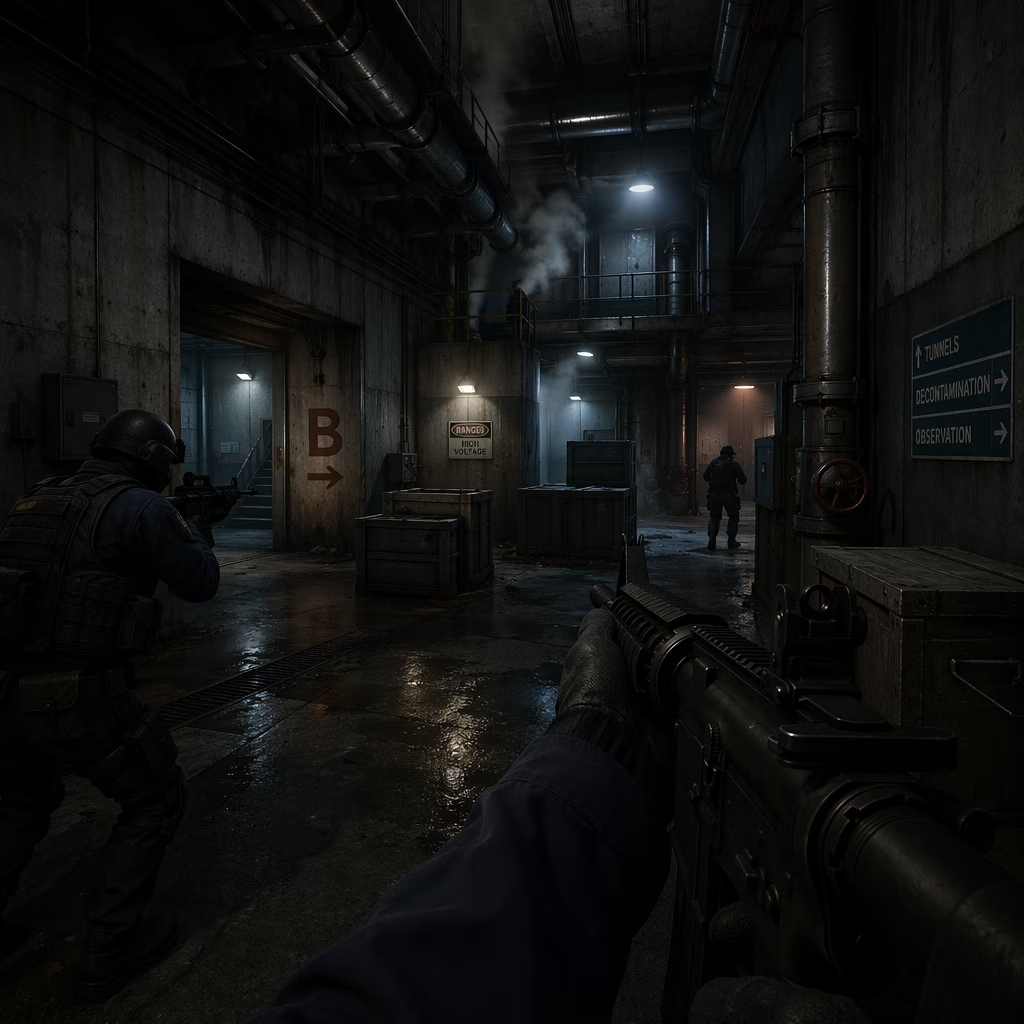
Surfing has been woven into Counter-Strike's DNA since the days of 'The Gap' over two decades ago. It's a mode that lets my brain fire on all cylinders without ever demanding full attention—a perfect workday companion or a late-night escape from the stress of competitive matches. The rhythm of strafing, the subtle adjustments to angle and speed, feels like carving through fresh silk. But in CS2's early years, that silk was riddled with snags. Inconsistencies in ramp physics, blamed by some on subtick servers, turned every run into a gamble. You'd be sliding gracefully, then suddenly stop dead as if your surfer had forgotten how to swim, all because a map's geometry decided to eat your momentum.
The turning point came with the July 28, 2025 patch. Valve finally acknowledged the gremlins lurking under the surface, noting they had "fixed several cases where a player would get stuck on map geometry while surfing." I read "several" with cautious optimism—not all cases, mind you, but enough to make me dust off my favorite surf server. Logging in felt like stepping onto a freshly waxed dance floor. The invisible walls that had acted like a sudden gust of wind shutting a glider's wings were, for the most part, gone. My runs became more consistent, the flow more predictable. Sure, I still encounter the odd hiccup, a rogue vertex that catches my edge like a pebble in a riverbed, but it's a fraction of what it once was. The fix brought back memories of the silky smoothness we had in Counter-Strike: Source, where surfing felt as natural as breathing.
What really elevated the experience, though, was a small but immersive addition: speed-sensitive sounds. As I carve through ramps now, the whoosh of wind and subtle audio feedback change with my velocity, wrapping the run in a sensory blanket that makes every turn feel weightier. It's like the click of a well-oiled gear engaging—a tiny detail that transforms the entire mechanism. These sounds, layered atop the visual flow, turn surfing into a near-meditative practice. I find myself chasing personal records not just for the glory, but for the sheer joy of hearing that perfect audio sweep.
Looking back from 2026, I can say the surf community has finally been thrown a proper life raft. While some purists still argue that the physics feel slightly different from Source or CS:GO, the overall experience is now worthy of being called a core part of CS2. I've spent countless hours since that patch gliding over colorful, abstract ramps, rediscovering the serenity that once made surf maps my go-to decompression tool. If you've been away from the surf scene, now is the time to jump back in—just don't blame me if you suddenly lose an afternoon to the flow.