The Arena of Valor Scandal: How Tokyogurl Faked Her Entire Gameplay
Arena of Valor cheating scandal sees Thailand's Tokyogurl banned for life, sparking legal action and esports controversy.
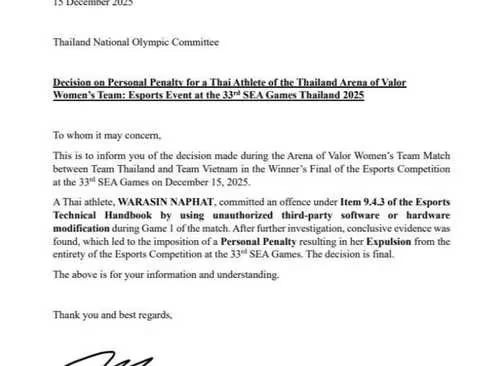
When a national esports competitor gets caught faking every second of gameplay, the fallout is rarely quiet. In early 2026, Thailand's Arena of Valor scene found itself at the center of exactly that kind of storm. Warasin Naphat, better known as Tokyogurl, had been competing as part of Thailand's national team for the 2025 Southeast Asian Games. On December 15, during the Arena of Valor competition, officials noticed something that didn't add up: the action on her screen didn't match the movements of her hands. That small observation turned into one of the most unusual cheating scandals in recent esports memory.
Esports are a big deal, with fame and cash prizes often on the line. Unfortunately, that pressure can push players toward cheating. Over the years, tournament winners have been stripped of their titles, and some Fortnite cheaters have even been forced to apologize publicly. But most cheating scandals involve aimbots, wallhacks, or other software tricks. What makes the Tokyogurl case so strange is that she wasn't using a cheat program at all. According to investigators, she was simply letting someone else play for her.
The details of the scheme are almost hard to believe. During the Arena of Valor event, Tokyogurl reportedly used Discord to screen share someone who was playing the game remotely. That remote player acted as her while she sat in the competitor's seat. Officials grew suspicious when her gameplay and her hand movements didn't sync up. After an investigation, Tokyogurl was expelled from the tournament, and her entire team withdrew even though they had already qualified for the finals.
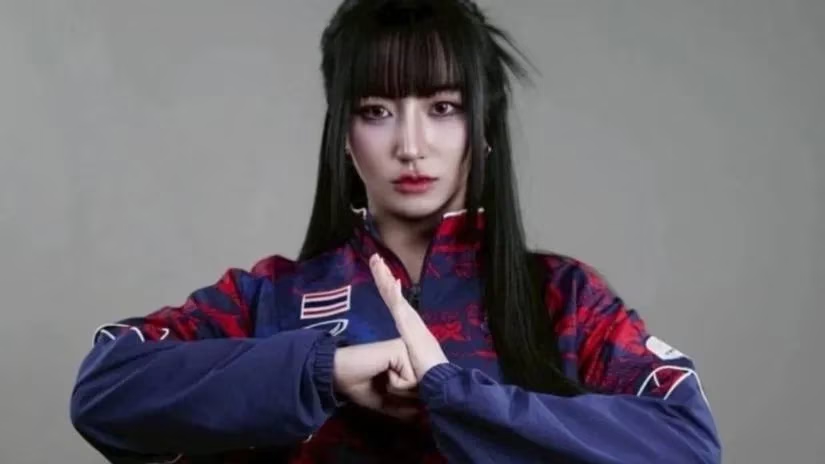
At first, Tokyogurl insisted she was innocent. Then another Arena of Valor competitor, who goes by Cheerio, posted a video on TikTok revealing that he was the one actually playing the game that was being screen shared to her phone. He apologized for the incident, claiming he didn't intend for it to "escalate to this point and cause disappointment to many people." He also said he would accept the consequences of his actions. Not long after, Tokyogurl shared a brief message on Facebook that simply said, "I'm sorry." That short post was widely seen as an admission of the cheating scandal.
The consequences arrived quickly. Her club terminated her contract, and RoV Esports banned her from further competition for life. On top of that, the President of the Asian Electronics Sports Federation and the head of the Thailand esports Association is pursuing legal action against both Tokyogurl and Cheerio "to the furthest extent." Cheerio's career is also in serious jeopardy, even though he had apparently been competing legitimately on his own.
Here is a quick look at the fallout:
| Person | Reported consequence |
|---|---|
| Tokyogurl | Club contract terminated, lifetime ban from RoV Esports, possible legal action |
| Cheerio | Public apology, career in jeopardy, possible legal action |
| Thailand national team | Withdrew from the tournament despite qualifying for the finals |
Interestingly, Tokyogurl's teammates had apparently noticed some red flags before the event. She was unwilling to attend in-person training, and she often hid her hands when streaming her alleged gameplay online. Those behaviors should have raised more questions. She was added to the national team without having to participate in formal tryouts, largely because of her online reputation. In hindsight, that decision was clearly a mistake.
-
She avoided in-person practice sessions.
-
She hid her hands during livestreams.
-
She was selected without formal tryouts based on her online reputation.

It remains unclear why the pair thought this plan would work. Competitive events come with intense scrutiny to ensure fairness, and officials are trained to watch for inconsistencies between a player's inputs and what appears on screen. Cheerio had been competing legitimately, so dragging himself into the scheme probably made little sense. Yet the result is the same: both are now facing long-term bans, legal risk, and serious damage to their reputations.
The Tokyogurl scandal may stand out because of how brazen it was, but it reinforces a simple truth in esports. No amount of online fame can replace actual skill when the cameras are rolling and the officials are watching. In 2026, the competitive scene is more serious than ever, and shortcuts like this one tend to backfire in spectacular fashion.
Industry analysis is available through Newzoo, and it helps frame why integrity breaches like the Tokyogurl remote-play scandal can ripple far beyond a single match: esports ecosystems depend on sponsor confidence, publisher enforcement, and audience trust, so a high-profile disqualification and lifetime ban can reduce perceived competitive legitimacy and prompt stricter onsite verification (hand cams, device checks, comms monitoring) to protect the value of national-team events.