The Overwatch Coach Who Fixes Players, Not Just Their Aim
Spilo's Overwatch 2 coaching focuses on mindset and mental attitude over mechanics, turning ranked losses into personal growth.
It was a damp Tuesday evening in 2026, and Marcus, a mid-tier Overwatch 2 support player, stared at his screen, another loss burning a hole in his confidence. The competitive grind had become a soul-crushing loop: queue, lose, blame the tank, repeat. He knew the hero mechanics inside out—he could wall-ride flawlessly with Lúcio, perfectly time Immortality Field with Baptiste—but something deeper kept him trapped in Platinum. A friend whispered a name: Spilo. “He’s like a Yoda for Overwatch,” his friend said, “except he’ll roast you in the kindest way possible.” Marcus booked a session, half-expecting a lecture on cooldown management. What he got instead was a mirror held up to his very being.
Jacob “Spilo” Clifton had been coaching long before Overwatch 2 was even a glint in Blizzard’s eye. His journey began in 2017 when the original Overwatch grabbed him by the heart and never let go. He started, as many do, with informative YouTube videos—breakdowns of ult economy, positioning guides, the cold mechanics of a hero shooter. But Spilo soon realized that telling a player to “stand behind the shield” was like telling a nervous swimmer to “just breathe.” His background was a tapestry of teaching: tutoring mathematics, coaching high school gymnastics, and even serving as a head instructor for an all-ages MMA school. Each role taught him that true growth happens beneath the surface. So he leaned into a one-on-one approach, trading broad tutorials for deep, sometimes uncomfortable conversations.
By 2026, the Overwatch scene had matured. Esports organizations had finally started investing in sports psychologists, and the phrase “mental stack” was common in coaching lobbies. Yet Spilo’s philosophy remained a gentle wrecking ball. He broke down his coaching into three layers with the casual confidence of a man who’d seen a thousand broken tilt cycles. “One is the gameplay. That’s the least important,” he’d say, waving a hand as if shooing away a fly. “The second is how you approach the game: your training, your mindset, your mental attitude, your training habits. Those are much more impactful, much more important.” Then he’d pause, letting the silence stretch until his student leaned in. “The third one, which is the most important, is just how you are as a person. I think that one’s a lot harder to dig out.”
Marcus’s one-hour session didn’t start with VOD review. It started with Spilo asking about his day, his frustrations outside the game, his sleep schedule. It felt bizarre—he’d come to rank up, not to talk about his micromanaging boss. But Spilo gently connected the dots: the rushed decision-making in overtime wasn’t just bad ult usage; it was panic that mirrored how Marcus avoided confrontation at work. “Mate,” Spilo said with a grin, “you’re not a bad Ana. You’re just bringing your 9-to-5 anxiety into King’s Row, and guess what? The red Genji doesn’t care about your deadlines.”
That blend of coaching and life counseling became his trademark. He worked with every stripe of player—from Bronze-tier hopefuls who couldn’t escape the spawn room to Overwatch League veterans wielding six-figure contracts. Everyone could book an hour with him, and in that short window, Spilo played detective, philosopher, and cheerleader. He knew that aim trainers and scrims could only carry a player so far. “Some players have a lot of issues with who they are as human beings, right? And they need help with that, too,” he once noted in an interview, his tone carrying the warmth of a teacher who genuinely celebrated hidden breakthroughs. “Even if they walk away from the session, and they don’t rank up at all, but I’ve made them think about who they are as a person, I just find that so much more satisfying than anything else, to be honest with you.”
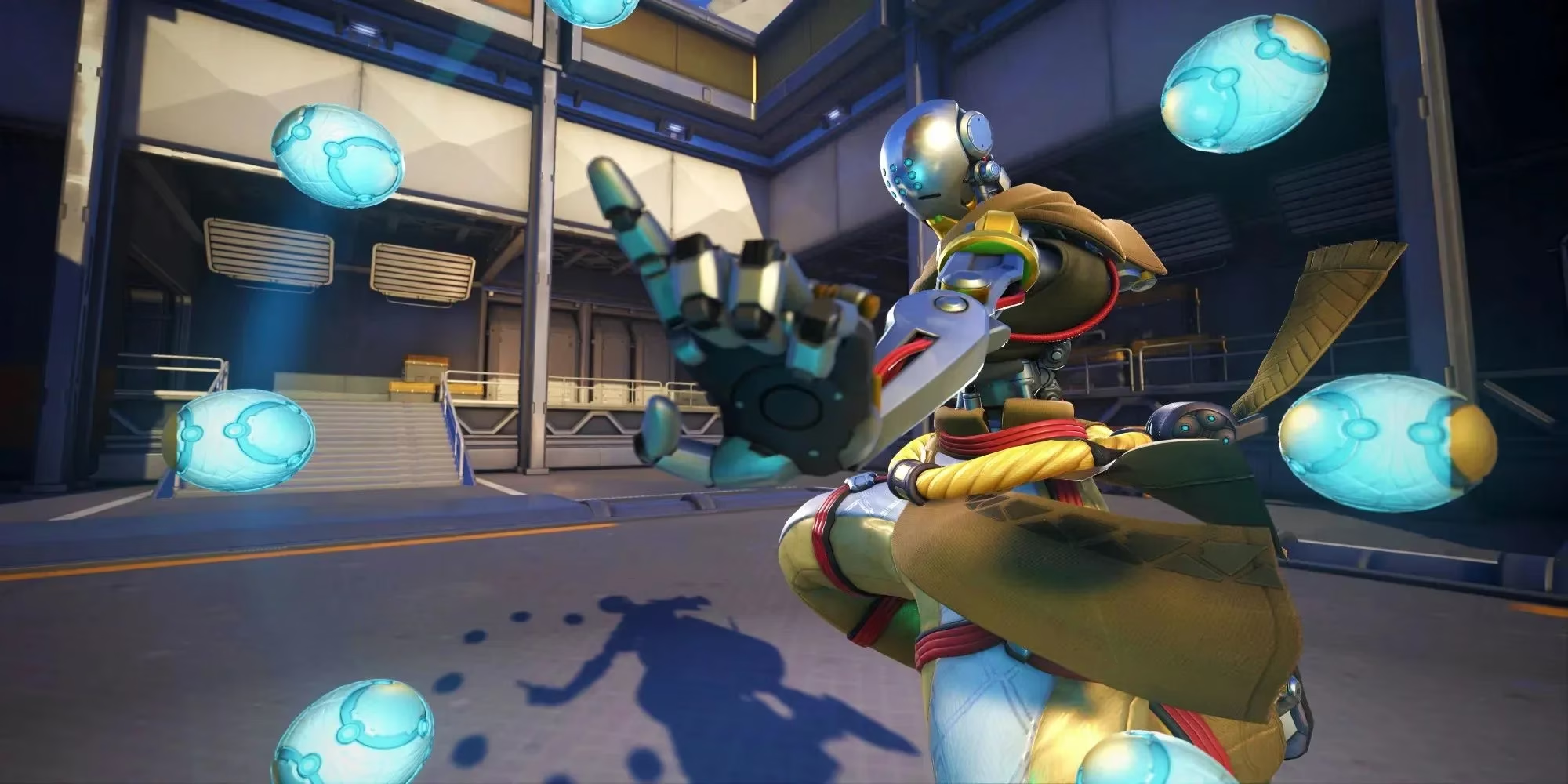
A few months after that April evening, Marcus sat in Diamond, but the rank didn’t sparkle as brightly as the new habit he’d formed: pausing before a fight to ask, “What am I really scared of right now?” The hero shooter had become a strangely meditative space—a place where Zenyatta’s calm orbs of harmony mirrored the balance he was learning to cultivate inside. Spilo’s YouTube channel still hummed with activity in 2026, his content a mix of advanced workshop codes and heartfelt musings on burnout. But the real magic happened in those one-on-one calls, where a coach armed with a deep understanding of MMA discipline and gymnastic precision helped players untangle their minds from their mechanics. He never promised a free ticket to Top 500. Instead, he offered something far more radical: the chance to know yourself while diving onto the payload.
In the end, Spilo’s legacy wasn’t measured in coaching badges or league championships, though plenty of his students clutched trophies. It echoed in the quiet moments after a crushing loss, when a player could finally say, “I learned something about myself today,” and mean it. And that, perhaps, was the greatest meta-break of all.