The Ramattra Controversy: How Overwatch 2's Battle Pass Locked Heroes Shaped the Game's Future
Overwatch 2's Ramattra, a powerful tank hero, sparked controversy with his battle pass unlock system and deep Omnic lore.
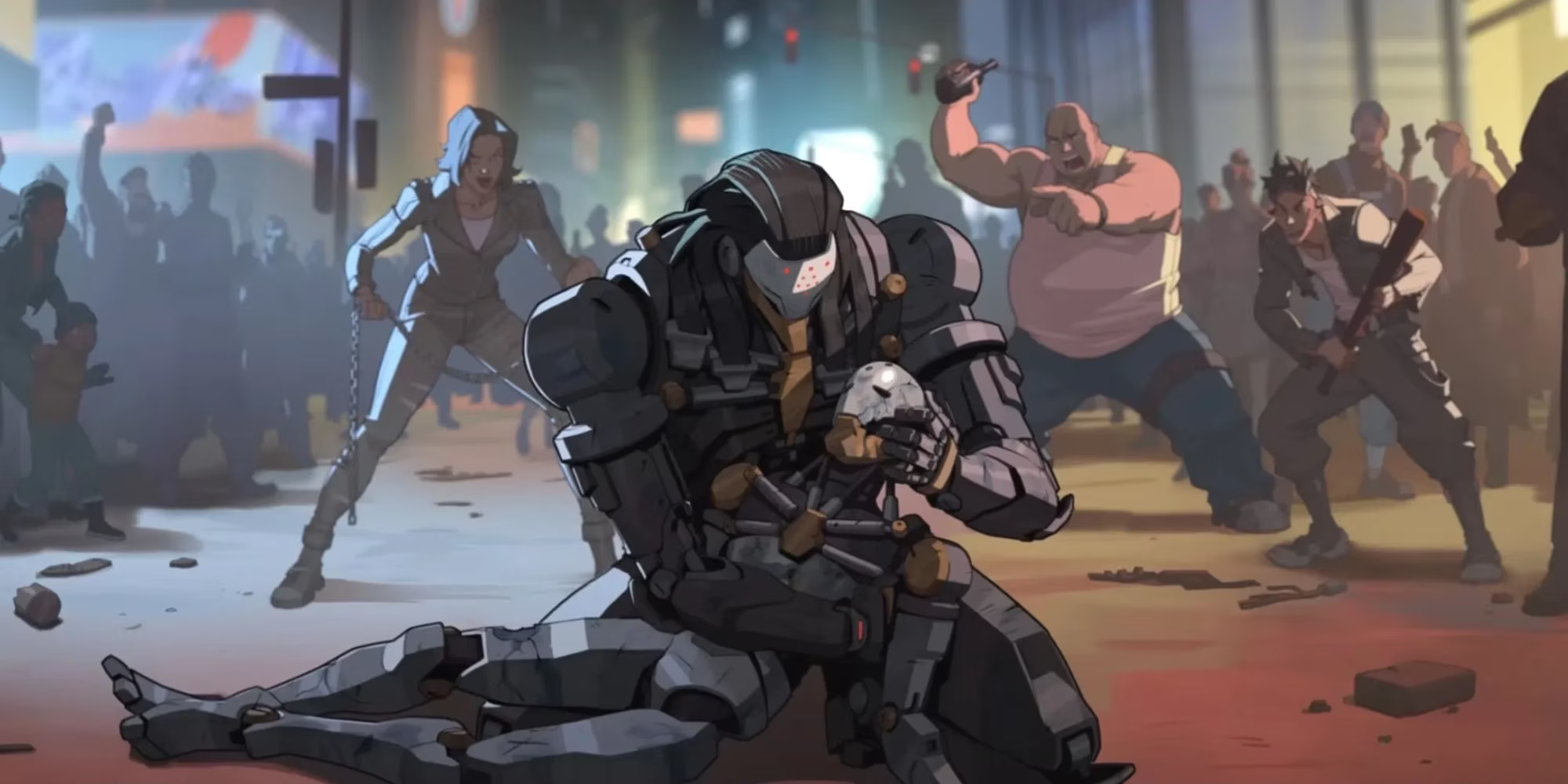
In the closing months of 2022, Blizzard Entertainment introduced a new hero to the Overwatch 2 roster, a choice that would ignite fierce debate among its player base. Ramattra, a tank hero with deep lore ties, arrived at the Overwatch League Grand Finals with grand expectations. He was first revealed far earlier, back in 2019 as a pivotal figure in the Storm Rising cinematic, but his playable debut came wrapped in a monetization model that immediately split the community. Unlike Zenyatta, who sought peaceful coexistence, Ramattra believed Omnic liberation required military conquest—a philosophy reflected in his two distinct combat forms: a ranged defensive Omnic form capable of shielding allies and harassing enemies from a distance, and a brutal Nemesis form designed for close-quarters brawling. His design was intricate, his narrative compelling, but the method of unlocking him overshadowed his tactical depth.
Ramattra was locked exclusively behind the Season 2 battle pass. Players who owned the original Overwatch were faced with two choices: purchase the premium pass to gain instant access, or grind all the way to level 55 on the free track. For veterans accustomed to receiving heroes at no additional cost, this felt like a betrayal. The grind itself was no small task; many players reported spending upwards of 50 hours to reach that milestone, a staggering time investment for a game that had once prided itself on allowing players to jump in and enjoy every character without barriers. Newcomers to Overwatch 2 found themselves in the same position they had experienced with Kiriko in the first season, but for original owners, the expectation of free hero access died hard. The situation sparked immediate backlash across forums and social media, with players labeling the system as a veiled pay-to-win mechanic. If Ramattra proved to be as dominant as Blizzard’s marketing suggested, those with the premium pass would enjoy a competitive edge from day one.
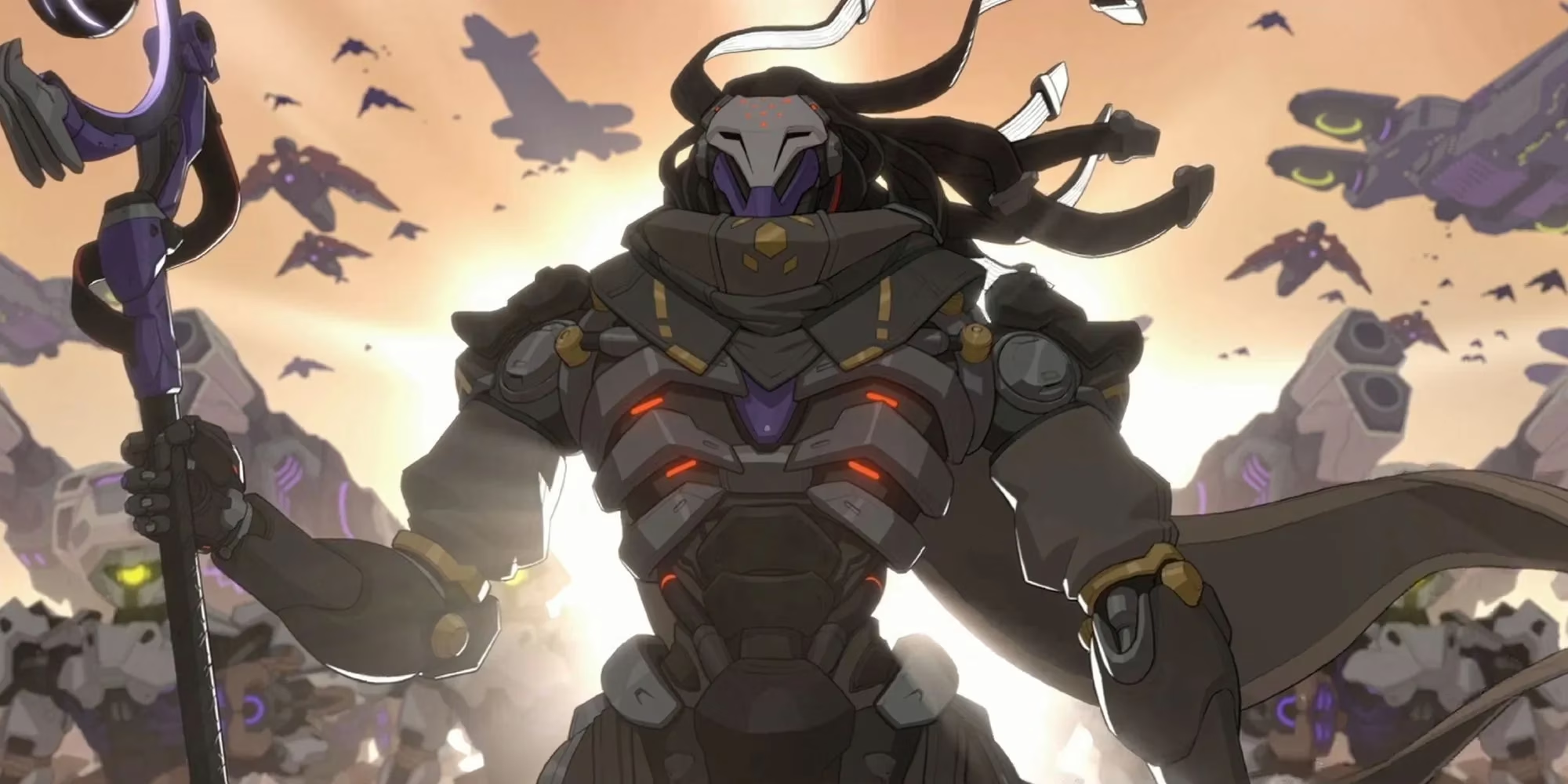
Blizzard’s art director Dion Rogers addressed the controversy head-on during a group interview. He acknowledged that unlocking heroes through the battle pass was “a constant conversation for our team,” a diplomatic nod to the internal debates that must have raged behind closed doors. Yet the resolution, at least for Season 2, remained unchanged: time or money. The statement felt hollow to many players. It confirmed a shift in Blizzard’s philosophy—one where the free-to-play model demanded friction to drive revenue, and hero unlocks were the most potent lever. This decision didn’t exist in isolation; it echoed a broader pattern of experimentation with player frustration thresholds. The premium pass unlocked Ramattra instantly, while the free path turned him into a distant goal, testing how long players would tolerate being locked out of core gameplay content.
The Ramattra release was not the only point of friction during that period. A lesser-known bug further eroded trust. Original Overwatch skins, which should have been purchasable with Legacy Credits, were erroneously tagged as new cosmetics in Overwatch 2, making them unavailable for veteran players who had saved those credits for years. A Blizzard support agent apologized to one affected player, calling it a significant oversight, but the company remained silent on its main communication channels. No immediate fix was announced, and players wondered whether the bug was intentional or just another symptom of a rushed transition to the sequel’s live-service structure. This oversight, combined with the battle pass hero lock, painted a picture of a game struggling to balance its legacy roots with aggressive monetization demands.
Looking back from 2026, the Ramattra controversy stands as a watershed moment. In the years since, Overwatch 2 has iterated on its hero unlock system multiple times. The level-55 grind was eventually adjusted to a more reasonable threshold, and seasonal events began offering catch-up challenges for new and returning players. Limited-time game modes occasionally granted free access to newly released heroes for trial periods, softening the all-or-nothing barrier. The conversation Rogers referenced never truly ended; it evolved into a series of compromises that shaped the hero shooter’s economy. Older heroes were gradually moved to a permanent free roster, and the battle pass introduced earnable currency for future unlocks, addressing some of the pay-to-win criticism.
Still, the memory of that Season 2 launch lingers. It taught the development team—and the industry at large—that character accessibility sits at the heart of competitive integrity. When a hero’s toolkit can define the meta, locking it behind a paywall or a marathon grind risks fracturing the player base. Ramattra himself proved to be a versatile tank, his forms providing dynamic responses to dive compositions and poke strategies. He became a staple in high-level play, but his initial exclusivity marred his arrival. Even as Overwatch 2 celebrates newer heroes and map additions in 2026, the Ramattra saga remains a reference point in conversations about ethical game design. Players now expect a clearer separation between cosmetic battle pass content and gameplay-defining characters, a demand that Blizzard has largely learned to honor.
Today, Ramattra sits comfortably in the tank lineup, his lore expanded through narrative missions and animated shorts that explore his complex relationship with Zenyatta and the Shambali. His Nemesis form still triggers a recognizable roar that sends the opposing team scrambling for cover. But for many, his name also evokes a time when Overwatch 2’s identity crisis threatened to push its community away. The battle pass lock, the skin bug, and the developer’s measured response all contributed to a turbulent turning point. It was a lesson in how not to onboard a beloved hero, and its ripple effects can still be felt in current design philosophies. As the game continues to evolve, the Ramattra episode serves as both a cautionary tale and a catalyst for the healthier ecosystem that players enjoy in 2026.