Xbox's Evolution: From Homegrown IPs to Industry Dominance Through Strategic Acquisitions
Xbox's strategic acquisition of Activision Blizzard redefines the video game industry, elevating Microsoft's dominance and IP portfolio.
In the ever-evolving landscape of the video game industry, few stories are as compelling as the transformation of Xbox. Once primarily known for cultivating its own internal franchises, the brand, backed by the immense financial power of Microsoft, has dramatically shifted its strategy in recent years. This pivot towards acquiring established intellectual properties (IPs) and renowned development studios has not only compensated for the waning relevance of some of its older flagship series but has also catapulted Xbox into a position of unprecedented industry dominance. How did a platform once synonymous with Halo and Gears of War come to command such a vast and diverse portfolio of gaming's most beloved worlds? The answer lies in a strategic acquisition spree that culminated in the landmark purchase of Activision Blizzard, reshaping the entire gaming ecosystem by 2026.

The Foundation: Cultivating and Acquiring a Core Roster
Xbox's journey began with building its own identity. For over two decades, Xbox Games Studios nurtured a suite of home-grown franchises that defined the platform's early years. This foundational portfolio included legendary series such as:
-
Halo - The quintessential Xbox shooter.
-
Gears of War - A gritty, cover-based third-person phenomenon.
-
Forza Motorsport - A pinnacle of racing simulation.
-
Age of Empires - A cornerstone of the real-time strategy genre.
-
Fable (acquired via Lionhead Studios in 2006) - A beloved action RPG series known for its humor and morality systems.
The first major signal of Microsoft's acquisitive ambition came in 2002 with the purchase of Rare for $375 million. This move was a masterstroke, bringing a treasure trove of iconic IPs under the Xbox banner, including:
-
🐻 Banjo-Kazooie
-
🐸 Battletoads
-
🐿️ Conker's Bad Fur Day
-
⚔️ Perfect Dark
-
🏴☠️ Sea of Thieves (a subsequent new IP developed by Rare)
However, the true turning point in scale arrived in 2014 with the staggering $2.5 billion acquisition of Mojang, the developer of Minecraft. Securing the second best-selling game of all time was a clear declaration: Microsoft was playing a different game, one defined by strategic, high-impact purchases.
The Expansion Era: Building a First-Party Powerhouse
From 2018 onward, Microsoft entered an aggressive phase of studio acquisition, effectively building a "super-studio" conglomerate. This period saw the integration of critically acclaimed developers like Obsidian Entertainment, inXile Entertainment, Ninja Theory, and Playground Games. The result was an instant and massive expansion of Xbox's creative output, adding franchises such as:
| Studio Acquired | Key Franchises Added |
|---|---|
| Playground Games | Forza Horizon |
| Obsidian Entertainment | The Outer Worlds, Pillars of Eternity, Grounded, Avowed (upcoming) |
| Ninja Theory | Hellblade |
| inXile Entertainment | Wasteland |
| Compulsion Games | We Happy Few |
| Undead Labs | State of Decay |
Yet, this was merely a prelude to the seismic shift that was about to occur.
The Megaton Deal: Acquiring ZeniMax Media
In 2020, Microsoft stunned the industry by acquiring ZeniMax Media for $8.1 billion. This single move granted Xbox control over Bethesda Softworks and its family of legendary studios, including id Software, Arkane Studios, and Tango Gameworks. Overnight, Xbox's roster absorbed some of gaming's most prestigious and profitable single-player and multiplayer experiences:
-
The Elder Scrolls & Fallout (Bethesda Game Studios)
-
Doom & Quake (id Software)
-
Dishonored & Prey (Arkane Studios)
-
Starfield (Bethesda Game Studios)
-
Wolfenstein (MachineGames)
-
The Evil Within & Hi-Fi Rush (Tango Gameworks)
This acquisition fundamentally altered the console wars, making many of gaming's most anticipated titles exclusive or timed-exclusive to the Xbox ecosystem. It demonstrated a clear strategy: to secure content so essential that it would drive platform adoption. But what could possibly top this?
The Crown Jewel: The Activision Blizzard Acquisition
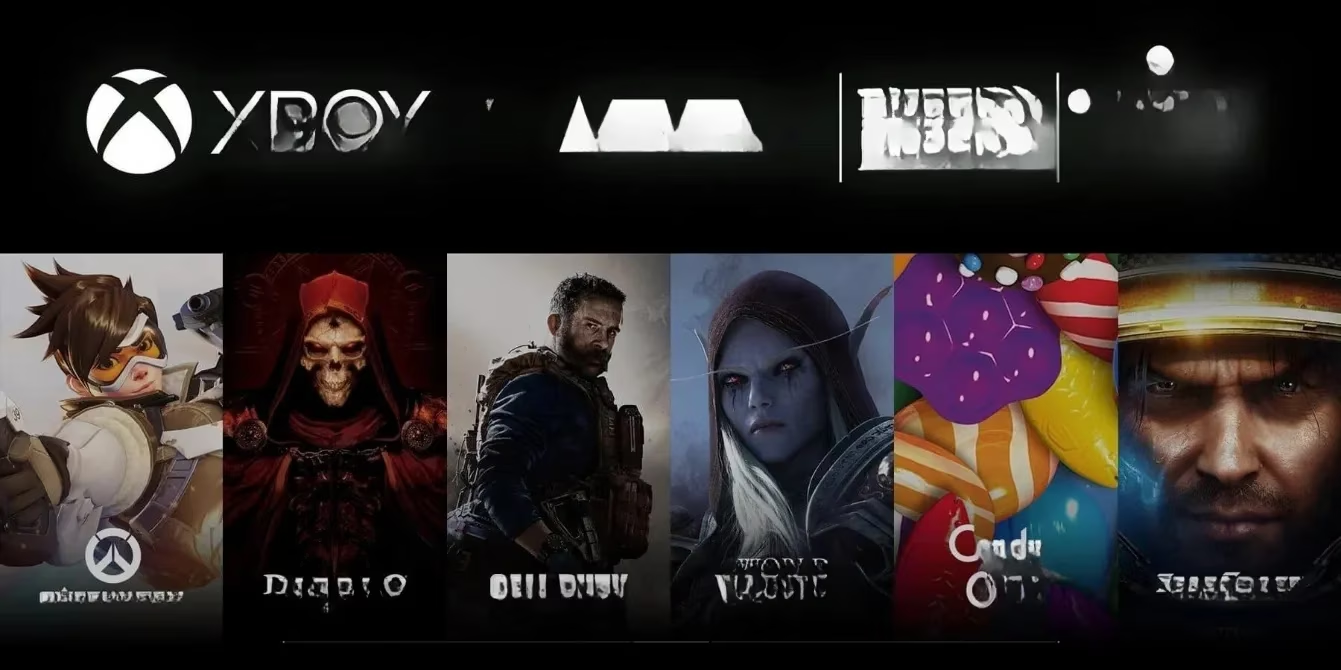
In January 2022, Microsoft announced its intent to purchase Activision Blizzard for a historic $69 billion. After nearly two years of intense global regulatory scrutiny, the deal was finalized. This wasn't just an acquisition; it was the consolidation of a significant portion of the modern gaming industry under one corporate roof. With this move, Xbox didn't just add a few franchises—it absorbed entire genre-defining ecosystems and mobile gaming juggernauts.
The Activision Blizzard portfolio is a who's who of gaming titans:
-
🎮 Call of Duty - The definitive first-person shooter franchise.
-
👹 Diablo - The archetype of the action RPG/loot genre.
-
🧙 Warcraft & Starcraft - The pillars of real-time strategy.
-
⛑️ Overwatch - A major hero shooter.
-
🐉 Crash Bandicoot & Spyro the Dragon - Iconic platforming mascots.
-
🎸 Guitar Hero & Tony Hawk's Pro Skater - Legacy kings of music and sports games.
-
Candy Crush Saga (via King) - A mobile gaming behemoth with billions in revenue.
The Present and Future: A Dominant Force in Gaming
As of 2026, the gaming landscape is unmistakably shaped by Xbox's strategy. The company now oversees a portfolio so vast and diverse that it touches nearly every segment of the market: from hardcore PC RPGs (The Elder Scrolls) and competitive shooters (Call of Duty) to casual mobile puzzles (Candy Crush) and family-friendly adventures (Minecraft).
The question now is not about if Xbox will make more acquisitions, but how it will manage this colossal library. The focus has shifted to execution: nurturing these studios, reviving dormant IPs, and ensuring a steady pipeline of high-quality games across Game Pass and retail. With franchises like Call of Duty, World of Warcraft, and The Elder Scrolls VI under its stewardship, Xbox has secured its relevance for a generation to come. The era of building from the ground up is now harmoniously paired with the power of strategic consolidation, making Xbox one of the most dominant content holders in the history of interactive entertainment.